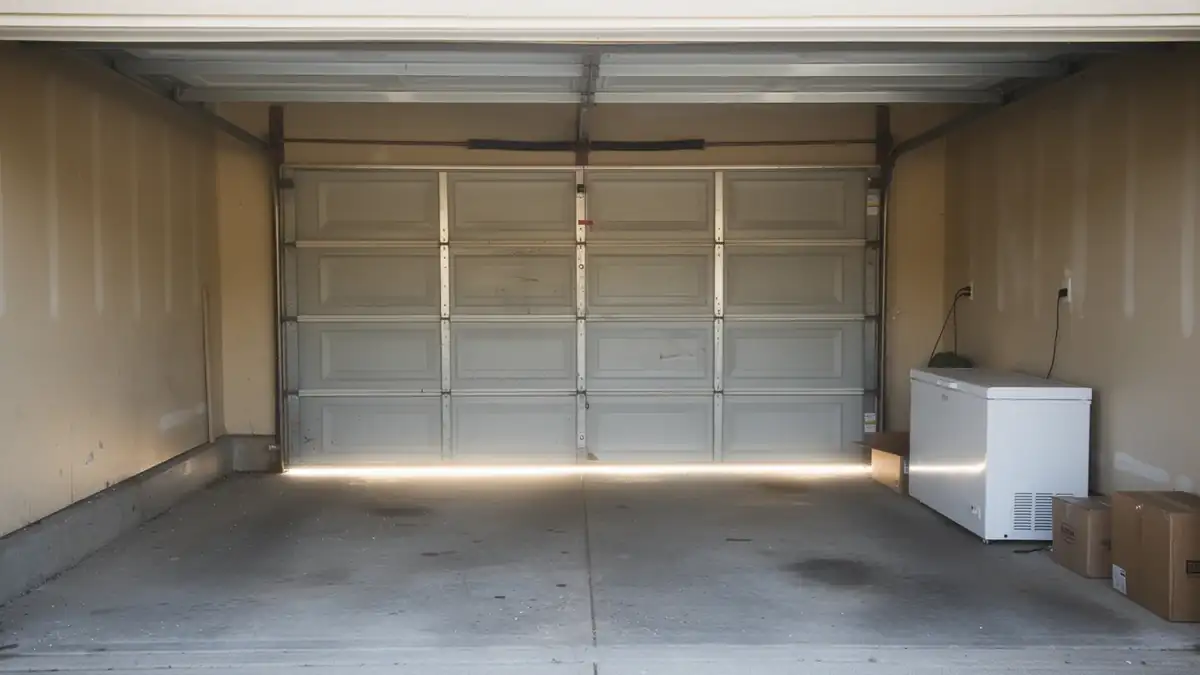
Leaving It Alone
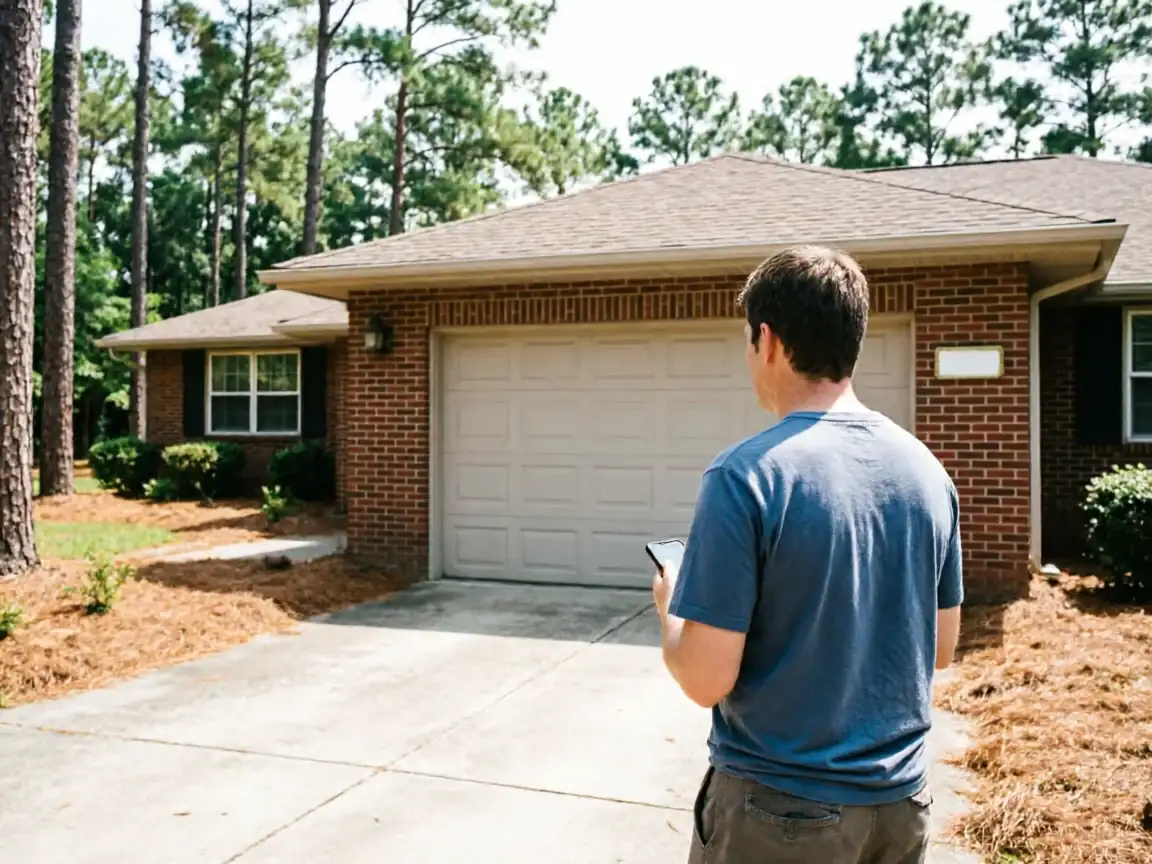
Not every door needs a service call, and we'll say that plainly. If your door opens, closes, and seats evenly with no grinding or shudder, leave it alone. A lot of what gets sold as preventive maintenance is just a truck roll with a grease gun. Houses in this area were mostly built between 1957 and 2001, with the heaviest concentration in the 1960s and 70s, and plenty of those original torsion setups are still running fine decades later because nobody messed with them past what they needed.
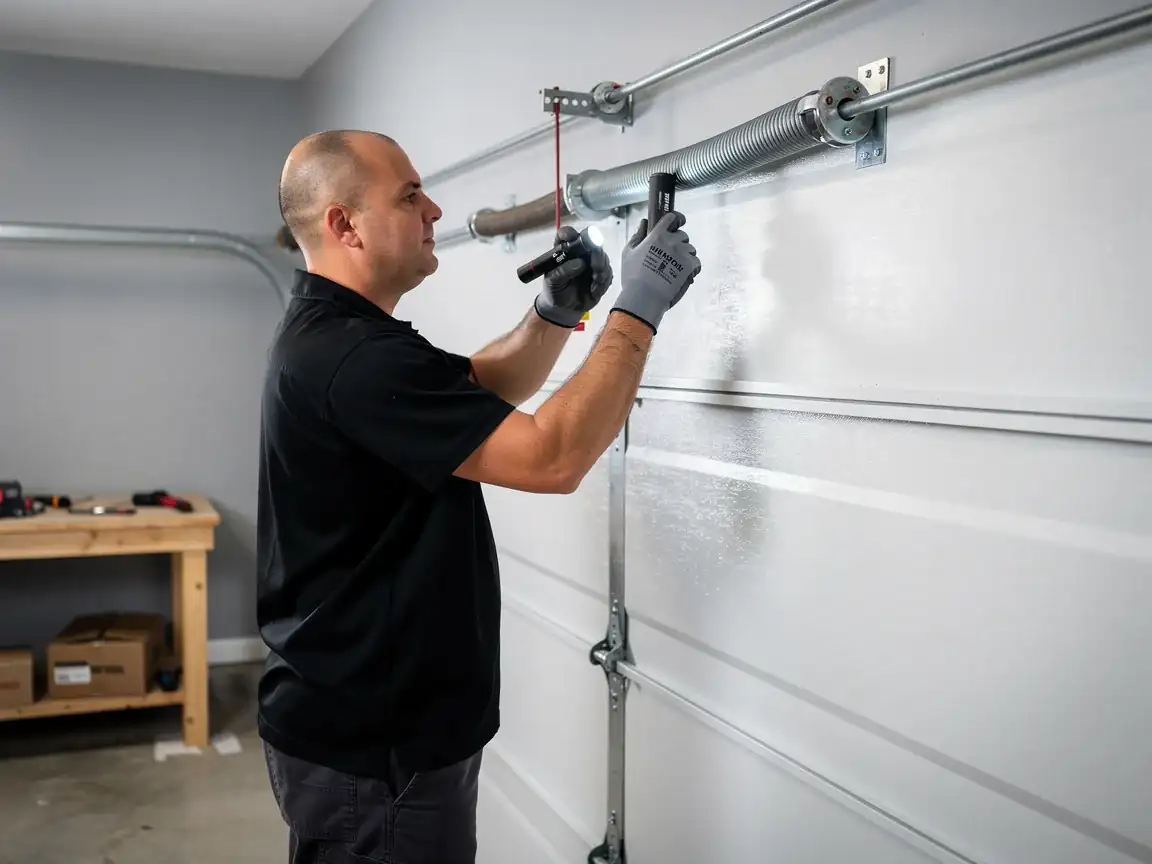
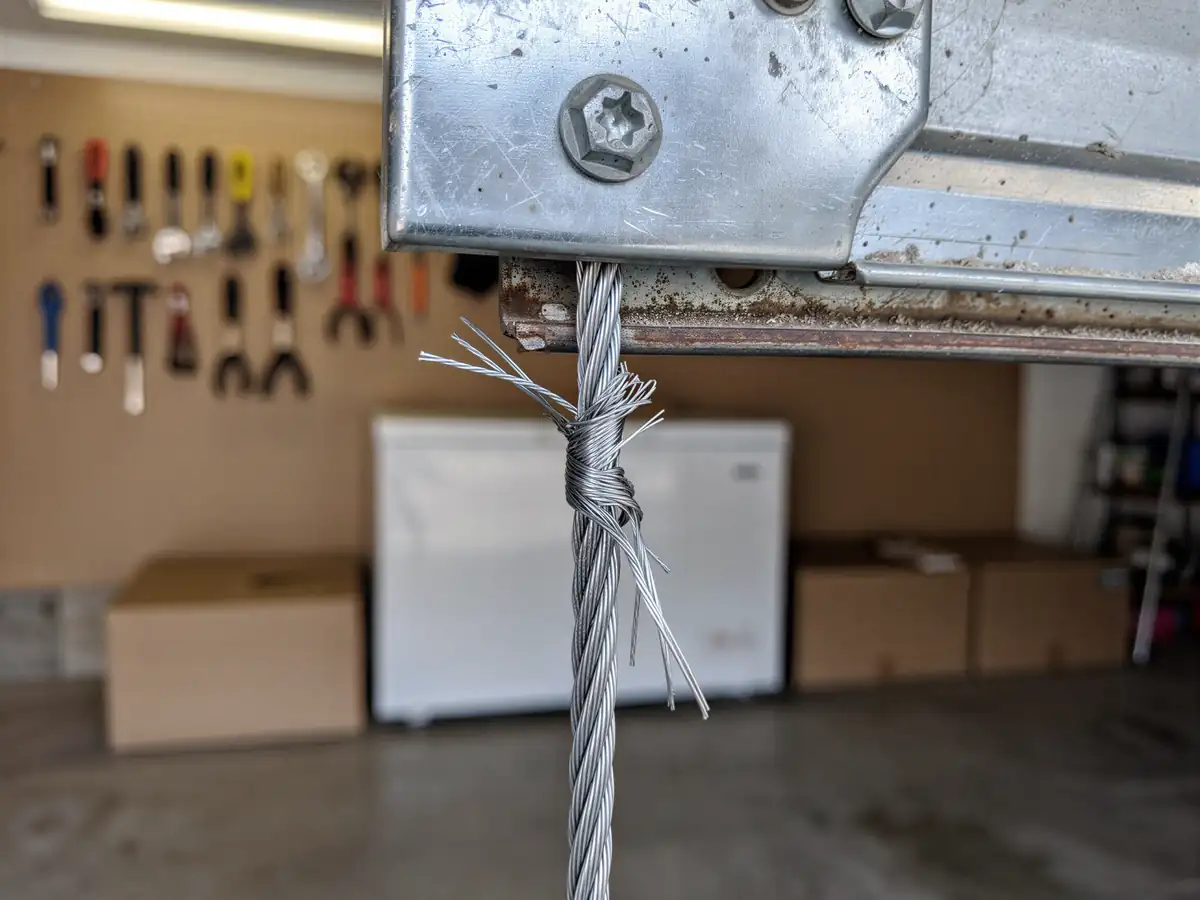
Where we tell people to stop waiting is when the symptom changes week to week - a cable that's started to fray, a spring that's visibly stretched on one side more than the other, a track bracket that's pulled loose from the framing. Those get worse on their own schedule, not yours. But a door that's just a little noisy, or a little slow, on a house from that era isn't an emergency. It's a maintenance item, and sometimes the honest answer is to watch it for another season before spending anything.
What Local Conditions Do
This area sits in a cold moderate climate band
Which means the door does real work in two different seasons, not one. Winter cold stiffens lubricant and shrinks metal just enough that a spring under tension behaves differently than it does in July. That's not dramatic, but it's consistent, and it's why a door that was fine in September can start binding in January without anything having broken.
Houses built across this stretch
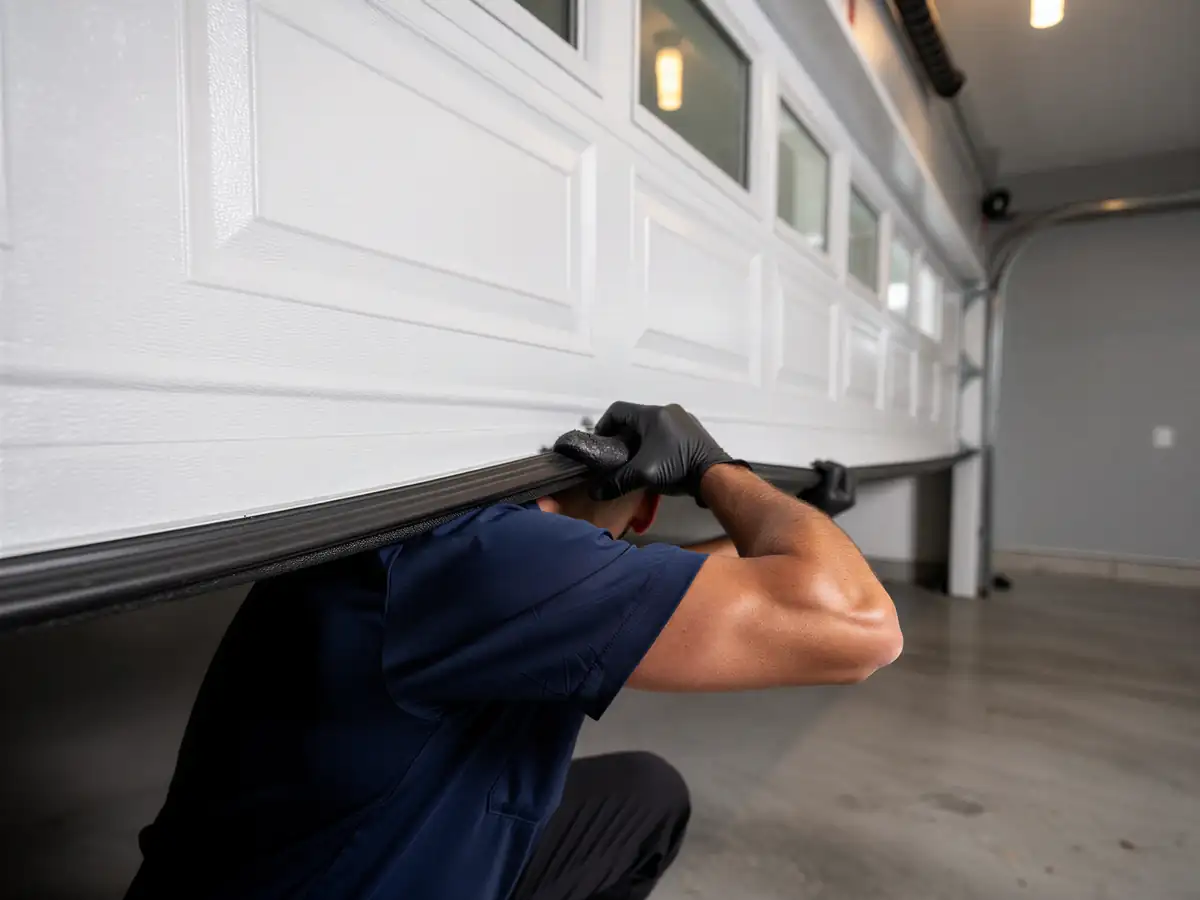
Mostly in the 1960s and 70s, per the housing data for this area - were built to the standards of their decade, and insulation and weatherstripping expectations have moved on since then. A door built with 1970s hardware wasn't speced for the sealing performance people expect now. That doesn't mean the door is bad. It means the seal at the bottom panel and the weatherstrip at the jambs matter more here than they would in a mild, dry climate, because they're the only thing standing between the garage and real temperature swings twice a year.
When It Stops Being a DIY Job
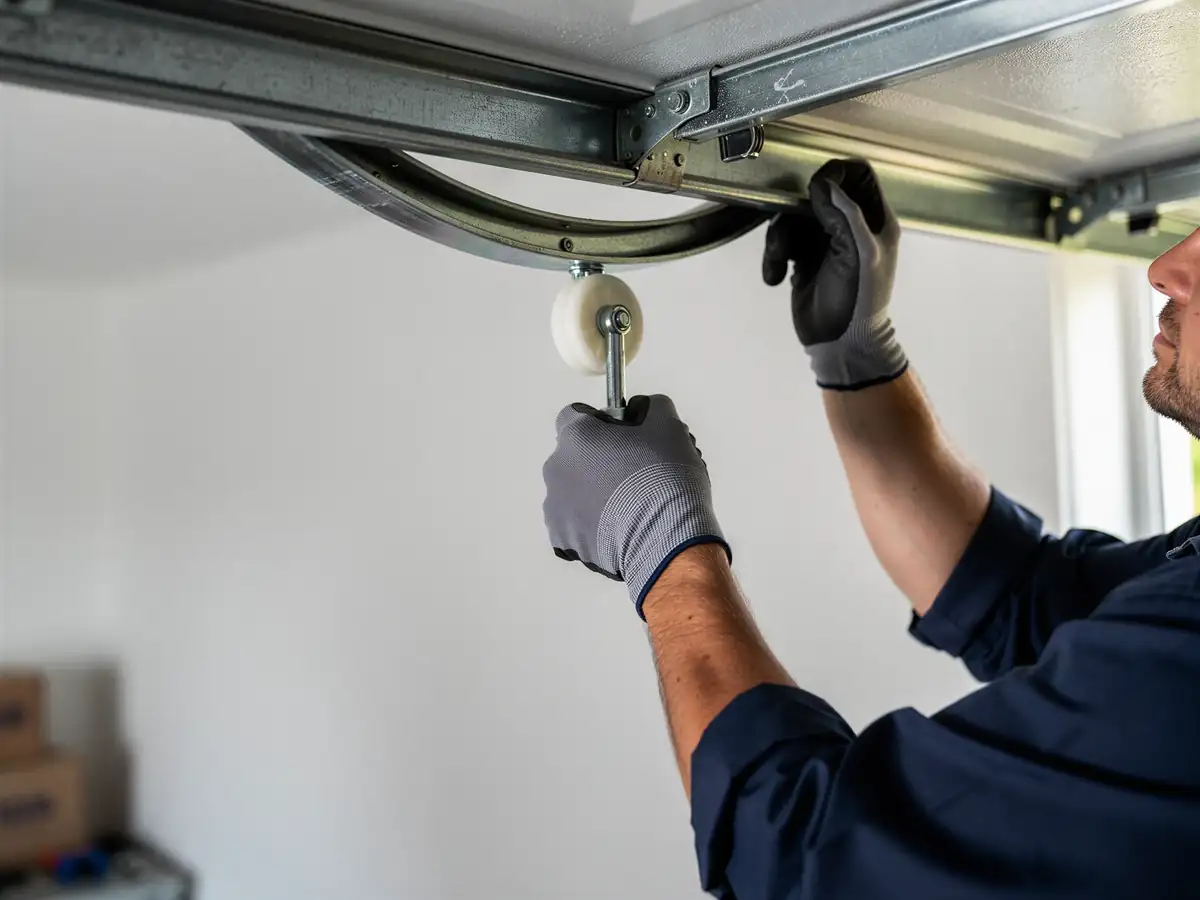
Across the 13,713 households in this service area, 6,489 are owner-occupied houses, and a good share of those still run the original opener and spring setup from whenever the house was built. That's a lot of original equipment. Tightening a loose bracket or lubricating a roller is reasonable DIY territory. Replacing a torsion spring under full tension is not, regardless of what a video makes it look like - the stored energy in a wound spring on a double door has put people in the hospital, and we're not going to pretend otherwise.
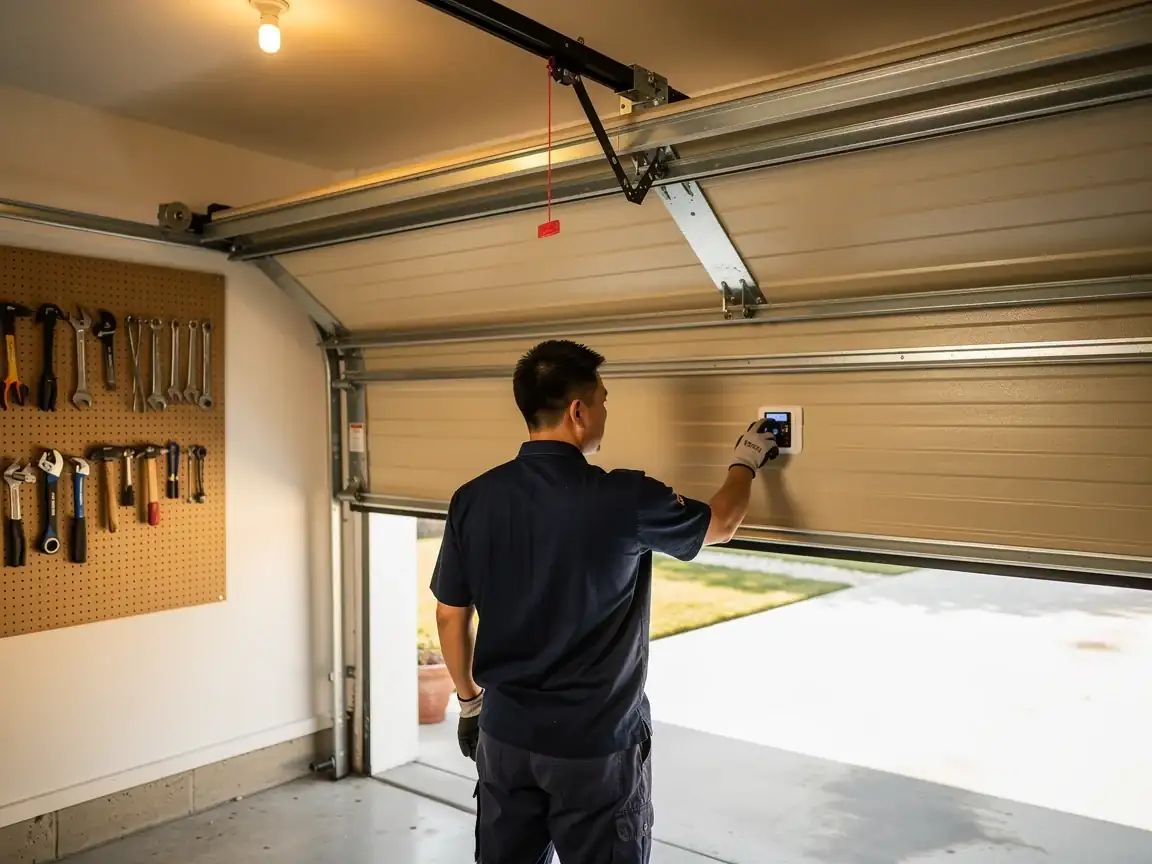
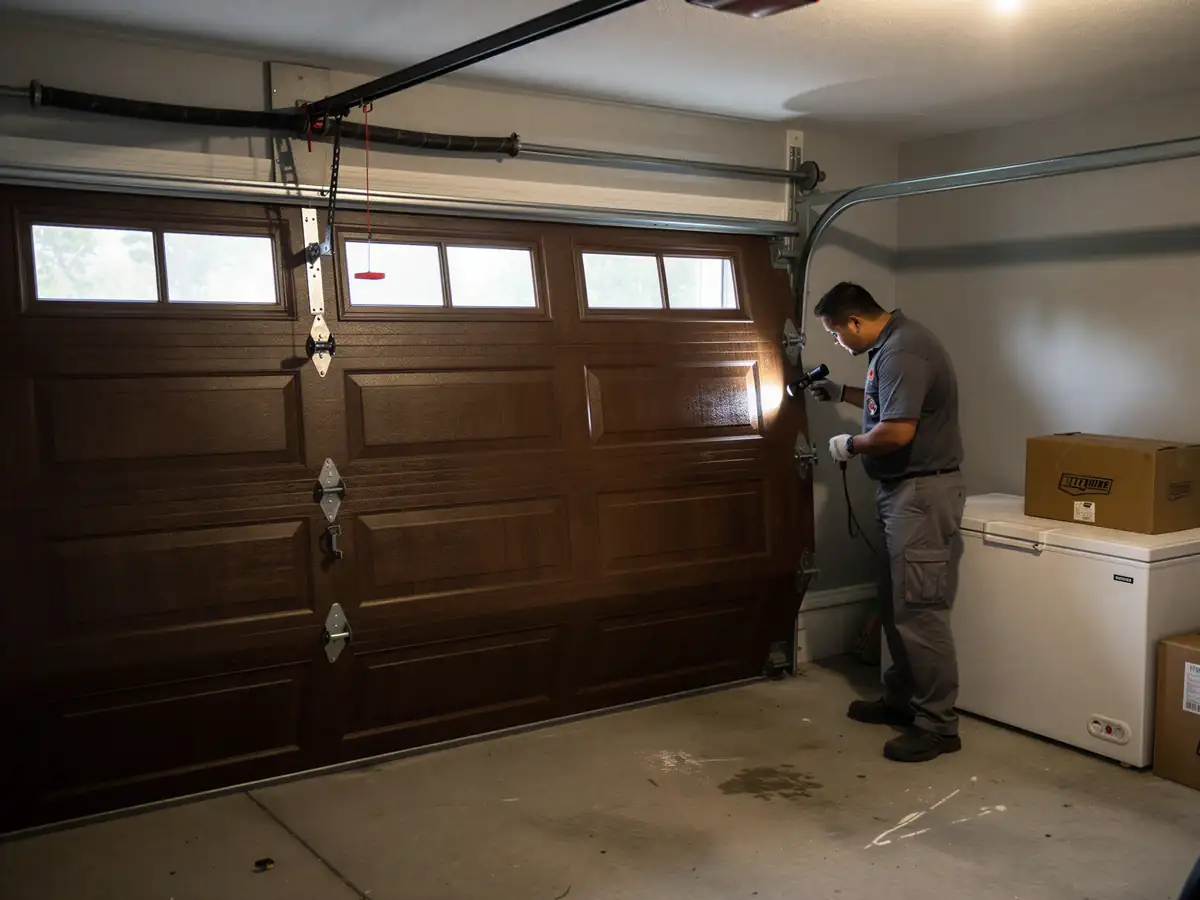
The other line is diagnosis. If a door that's run fine for years on original hardware suddenly won't stay open, or the cable has jumped the drum, that's usually two or three things working together, not one obvious fix. On a house from the 1960s-70s building wave, parts availability is part of the call too - some of that original hardware isn't made anymore, and matching it correctly takes more than a parts-store guess.
The Problem
The real problem on houses from this era isn't usually the door panel - it's what's behind it. A median household income of $52,799 in this area means full system replacement isn't the first move most people reach for, and it shouldn't have to be. A lot of the service calls we'd expect to see here are springs and cables doing exactly what 50-year-old steel does: fatiguing slowly, then failing on a cold morning with no warning.
We won't tell you that every older door needs replacing, because most don't. What we will say is that a repair on original 1960s-70s hardware sometimes costs close to what a new, better-sealed door would, once you account for parts that have to be sourced rather than pulled off a shelf. When that math doesn't favor repair, replacement is the honest answer - not because the old door failed you, but because it's done the job it was built for.