Stocked Parts
Lindale sits five miles out from our shop in Rome, close enough that we don't have to plan a special trip around a roller job the way we might for the towns further out on our list. That matters because roller wear calls are usually simple, parts-on-the-truck visits, not diagnostic puzzles, and a short drive means we can fit one in without stacking it onto a bigger service run.
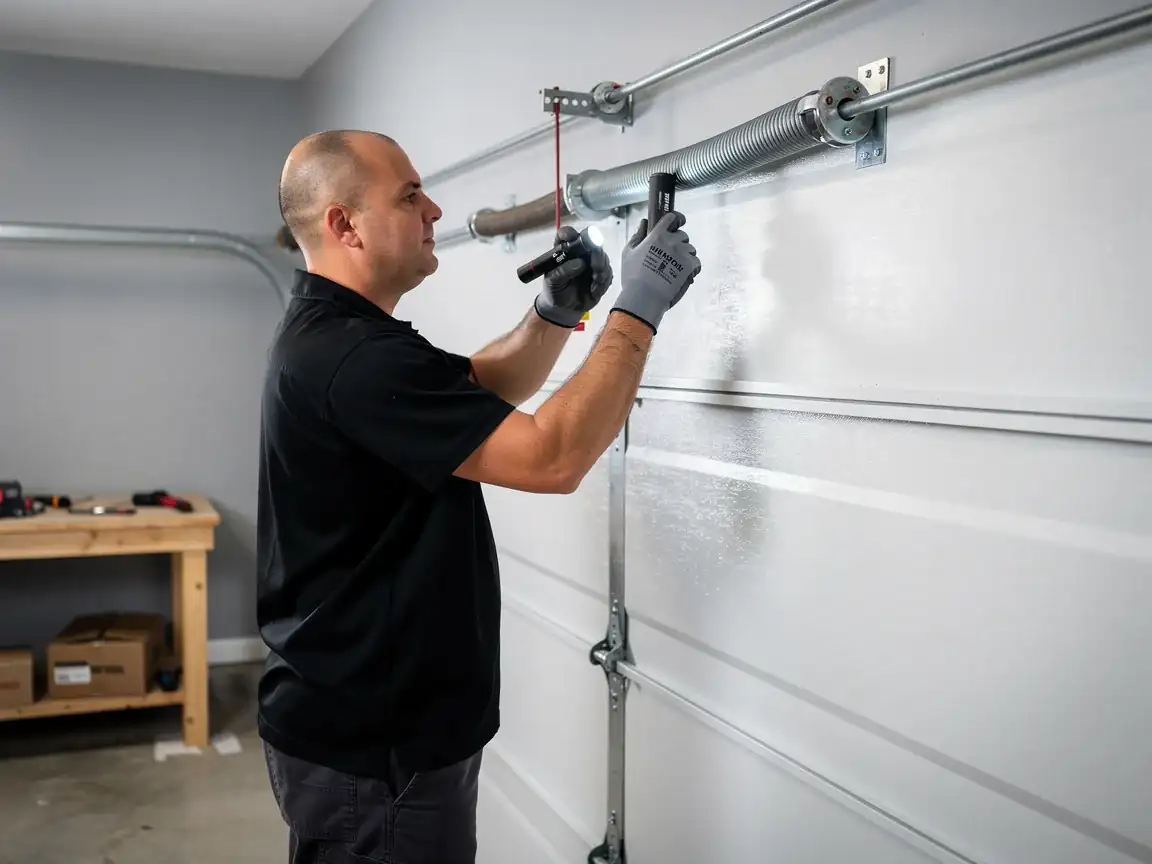
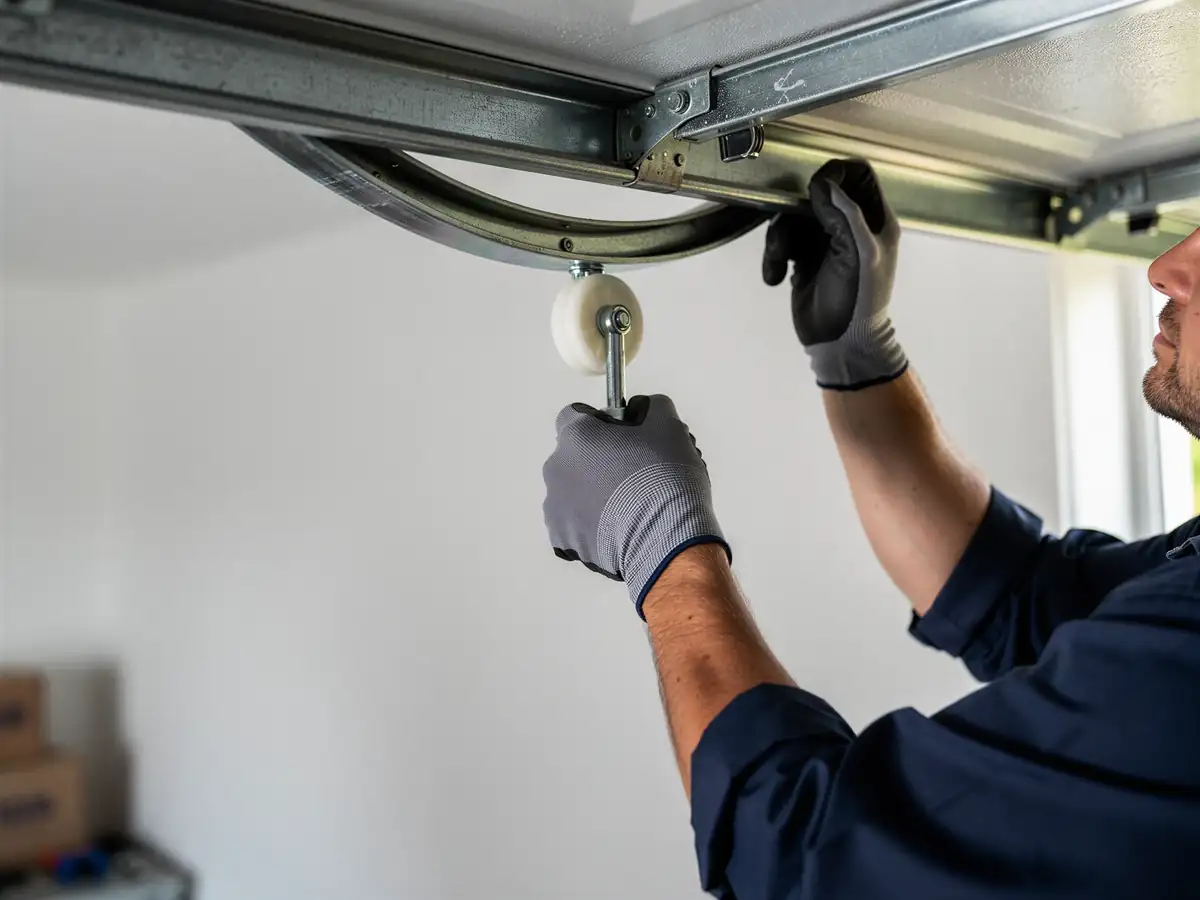
Most of the houses we see calls from in Lindale went up around 1963, which puts the garage doors on original or first-replacement steel track built to a narrower rail profile than what's sold today. The stock steel rollers that shipped with those doors wear grooves into the track edges over time, and once that happens the door starts to shudder on the way up instead of sliding. We carry both 7-ball steel rollers and sealed nylon rollers on the truck, and for a door still running its original 1960s track, steel with the right stem length usually seats cleaner than a universal nylon roller that's sized for newer rail.
We don't stock every stem length and wheel diameter ever made. If a door has unusual aftermarket track from a past repair, that can mean a short wait on a part instead of a same-visit fix. We'll tell you on site if that's the case rather than force a roller that doesn't belong there.'
How Long It Takes
A straight roller swap on a double door
Where the track is in decent shape and the rollers are just worn rather than seized, runs about the same here as anywhere on our route - the time is in the door, not the drive. What the drive does affect is scheduling: at five miles out, Lindale calls slot in easily alongside other stops without eating half a morning in transit, which is the opposite case from towns 17 miles out where travel time starts competing with the job itself.
- 17 miles
Where time adds up is condition, not distance
Doors going back to that 1963-ish build era often have track that's been reset or reshaped by hand over the decades rather than replaced outright. Rollers that have been grinding against slightly bent rail for years leave metal shavings and bent stems behind, and clearing that out before new rollers go in takes longer than the roller swap itself. We budget for that possibility rather than quote a flat number and hope the track is clean.
The Complications
The complication we run into most in Lindale isn't the roller, it's what the roller has been rubbing against. Original or early-replacement track from a house built around 1963 is thinner-gauge steel than what's used now, and decades of a worn roller dragging against it leaves a polished, slightly widened groove. New rollers seated in that groove will ride smoother for a while but the underlying track wear doesn't go away. On an older door we'll point out if the track itself needs resetting or swapping, since fresh rollers on bad track is a repeat call waiting to happen.
Cold, damp winters in this part of Georgia also play a role - not dramatic weather, but steady moisture that lets surface rust take hold on steel rollers and bearings faster than it would in a dry climate. That rust is often what's actually locking a roller in place, not the stem or the track. We see this on doors regardless of income or house size, which is one reason roller jobs here tend to be straightforward repairs rather than door replacements - the fix is usually cheaper than people expect once we're looking at it in person.
Booking a Visit
Lindale calls go through our main booking line out of Rome, same as the rest of the area we cover. Because the drive is short, we can usually work a roller job into a day without much lead time, though we won't promise a same-day slot here that we're not promising on the main Rome page - distance makes it easier, it doesn't change what we commit to.
If you're not sure whether what you're hearing is a roller problem or something else - a bent track, a dying opener - tell us what the door is doing when you call. A roller issue usually sounds like a rhythmic thump or grinding as the door moves, not a sudden bang or a door that won't move at all. That difference changes what we bring on the truck.