What the Fix Involves
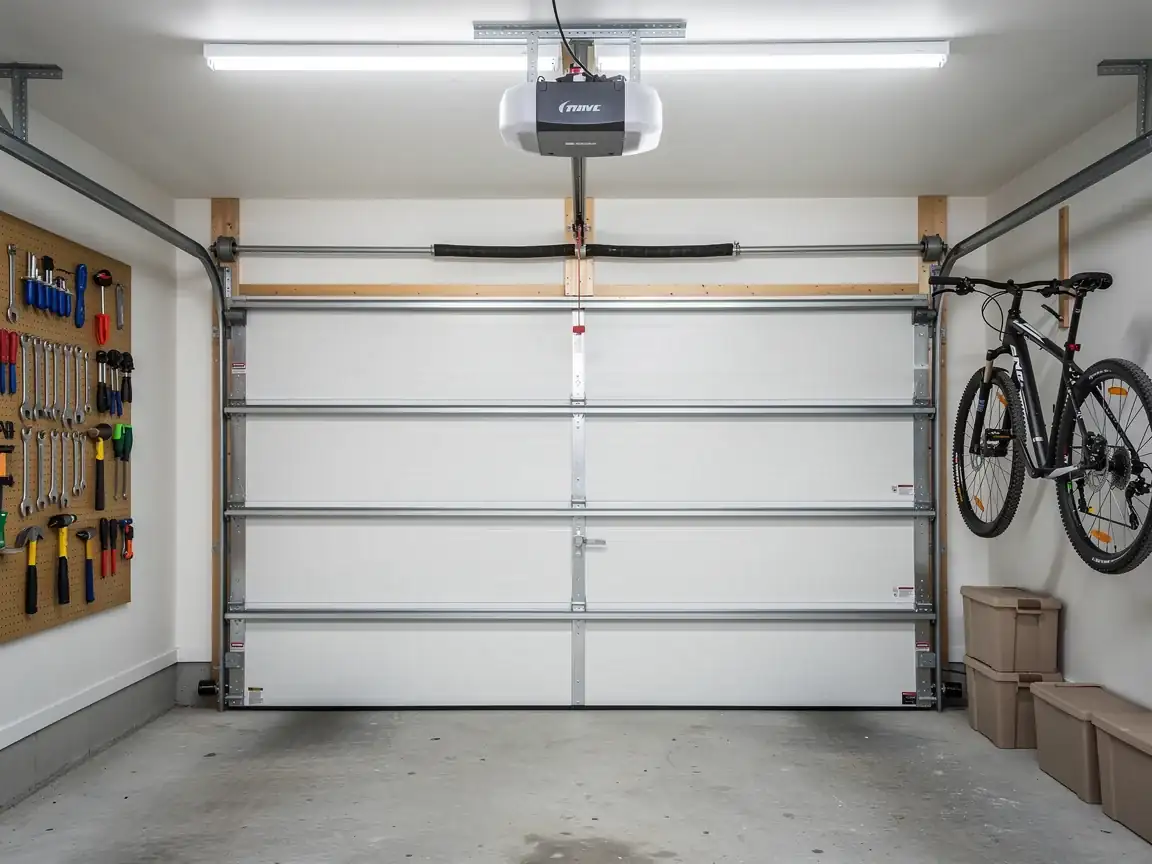
Most opener calls we take in Cave Spring aren't about a dead motor. They're about a drive system that's been grinding itself apart for months before anyone noticed. The median home here went up around 1971, which means the garage itself usually predates automatic openers by a decade or more - these units got added later, often as a retrofit onto a stud wall and header that was never built with an opener bracket in mind.
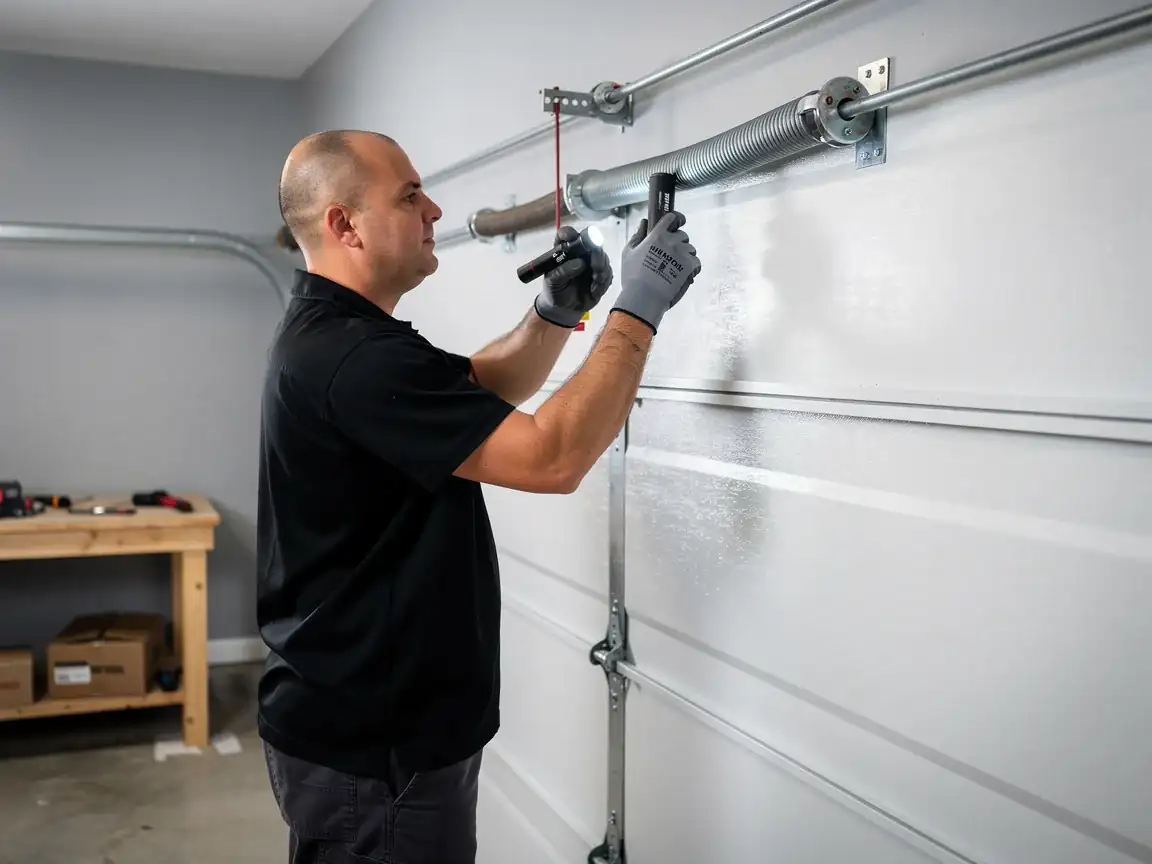
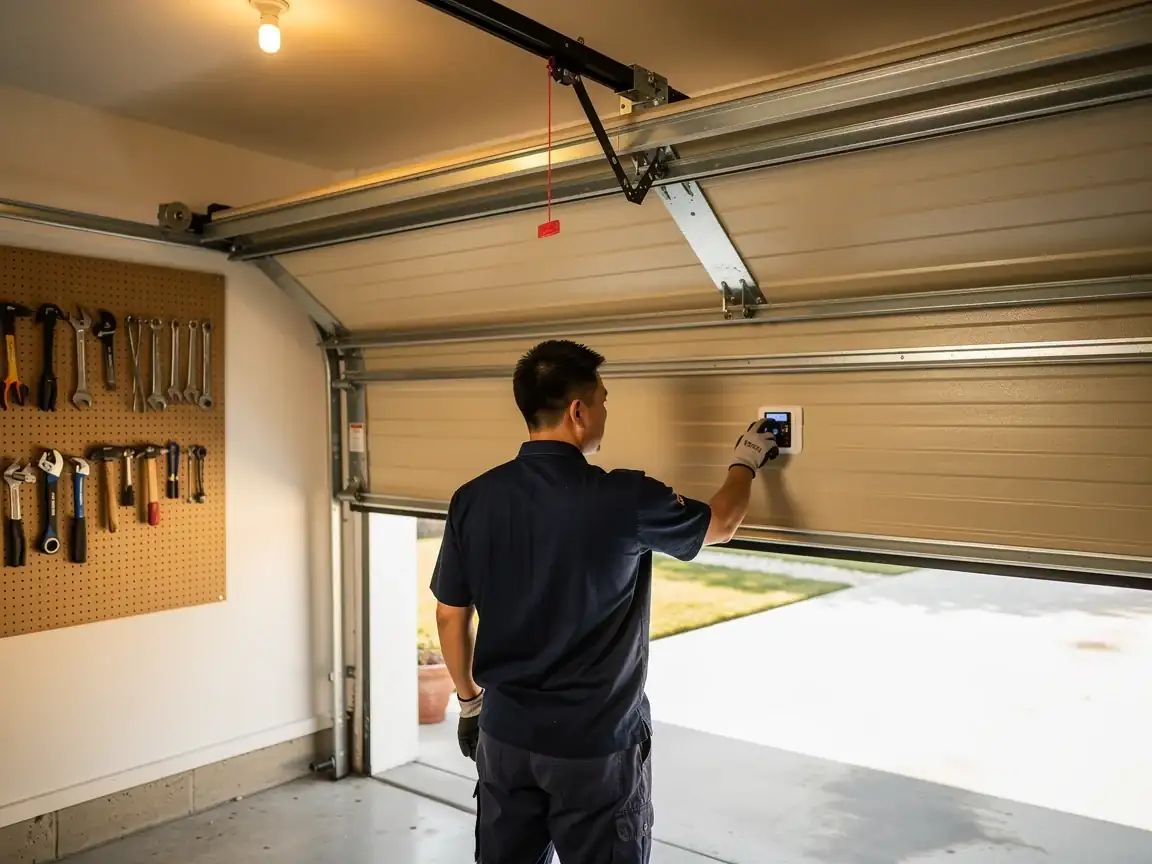
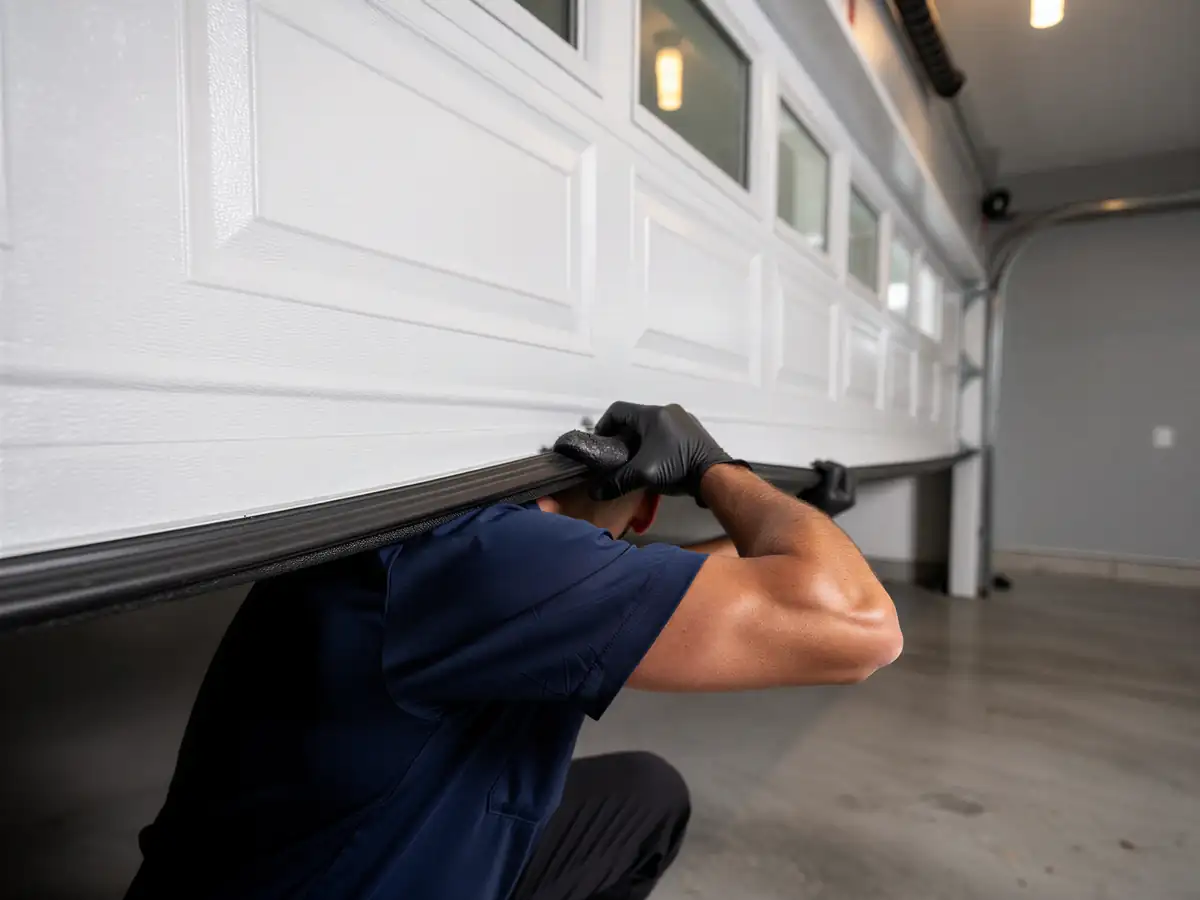
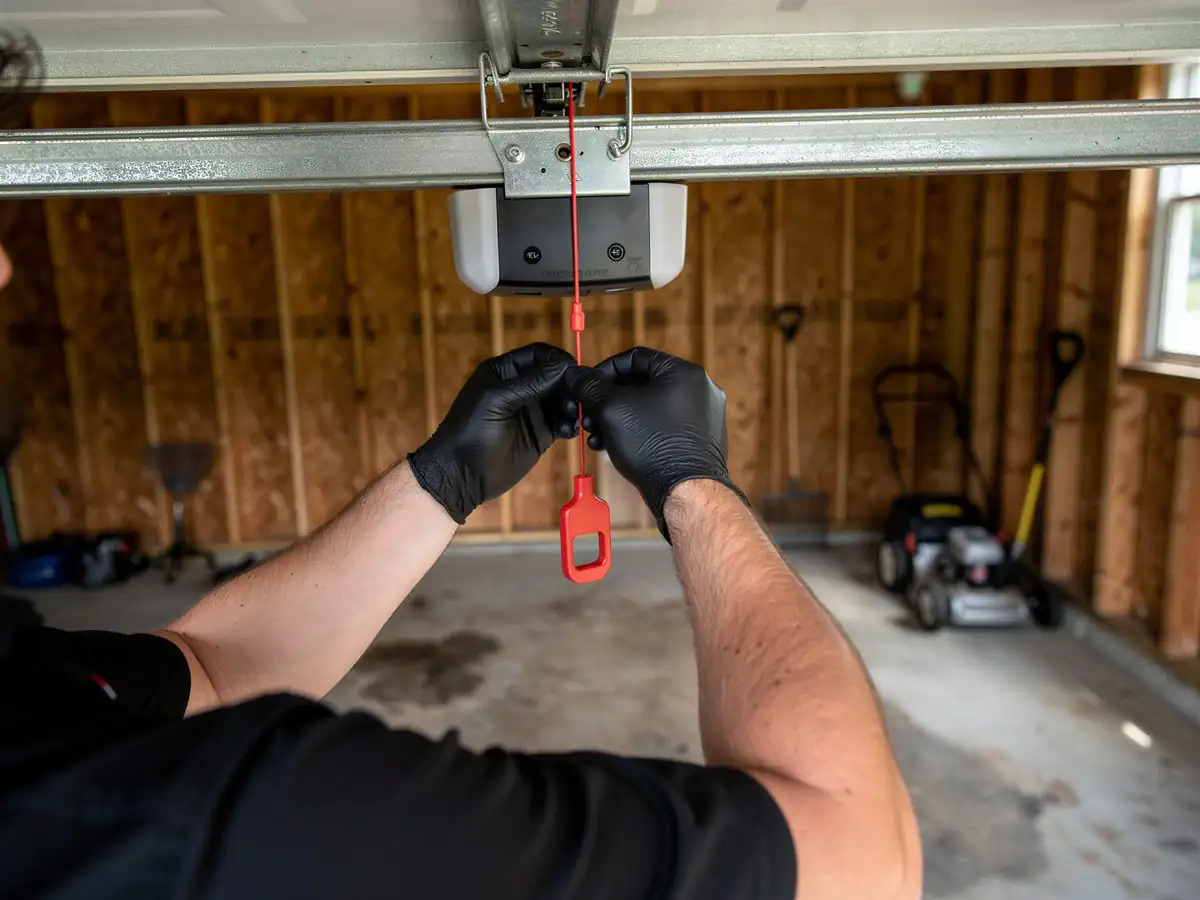
That matters for the fix. On a lot of these retrofits, the mounting point has loosened over the years, so a board or gear replacement alone doesn't hold unless we also shore up what it's bolted to. We check the drive gear and sprocket first - on chain and belt units from that era, plastic gears strip quietly, and the door starts reversing or stalling before it fully stops. Capacitor failure on older motors is the other common one: the opener hums, tries, and gives up. We replace what's actually failed. We don't swap a logic board when the problem is a worn trolley carriage, and we say so before we quote it.
How Long It Takes
A straightforward gear or capacitor swap on an opener that's otherwise sound is usually a same-visit job
We carry the common parts for units this age on the truck. Where it runs long is diagnosing an intermittent fault: an opener that works fine when we're standing there and fails at 6 a.m. for the homeowner takes more time to chase down, sometimes a return trip if the fault doesn't show itself.
We're driving the 14 miles from Rome to get to Cave Spring
So we build that into scheduling rather than promising a window we can't keep from that distance. If a part isn't on the truck - which happens more with openers old enough to be out of production - we tell you that up front instead of guessing at a timeline.
- 14 miles
The Symptom
The call usually starts one of two ways: the door won't close all the way and reverses partway down, or the opener runs but the door doesn't move at all. The first points to a sensor or limit issue, sometimes a gear slipping its teeth. The second is more often the drive mechanism itself has let go - the belt's snapped, the chain's come off its sprocket, or the motor's spinning with nothing connected to it.
With the housing stock in this part of the county mostly dating from the 1960s through the 1970s, we see a fair number of openers that are themselves 25 to 35 years old, installed well after the house but still original equipment from whoever put them in. At that age, failure isn't really a surprise - it's overdue.
The Complications
The honest limitation: if the opener is old enough that the manufacturer's stopped making parts for it, repair can cost close to what a new unit runs, and we'll tell you that rather than patch something that'll fail again in six months. We've found this more often in Cave Spring than in newer subdivisions, simply because the opener age here tends to track the home's age.
The other complication is less about the opener and more about the structure around it. On a garage built in 1971 and automated later, the header or jamb the opener bracket is lagged into has sometimes taken on moisture or shifted slightly over fifty-plus years. A new opener bolted to a weak mounting point won't hold any better than the old one did, so part of the job is checking that before we call it finished, not after a callback.