What You Pay
A garage door that went up in Summerville around 1974 - the median build year here - is almost always a steel sectional door, sized for a single bay or a standard two-car opening, hung on galvanized track that predates the nylon-roller, insulated-panel doors you see going into newer builds. That matters before we talk money, because what an off-track repair costs depends heavily on whether the original track and hinges are still in place or whether someone already swapped in newer hardware that doesn't quite match the door's age.
Summerville's median household income runs around $31,429, noticeably below the roughly $52,799 median across the wider service area this company covers. That gap shows up in the repair-versus-replace decision more than in the repair price itself: more Summerville jobs end with the old track rehung and the door re-balanced rather than a new door ordered. We don't have a fixed dollar figure to quote here - every one of these jobs has a different combination of bent track, torn hinges, or a cable that jumped the drum, and pricing that right takes a look at the door, not a guess over the phone.
One honest limit: if the panels are cracked or the track is bent beyond straightening, no repair price makes sense next to a replacement door, and we'll say so rather than patch something that'll come off again in six months.
How Long It Takes
Summerville sits about 17 miles out from Rome
Which is where the truck starts every job here - there's no branch or depot in town, so the drive is part of the day's schedule, not an extra. That distance doesn't change how long the repair itself takes once the truck is on site; it changes when the truck can get there.
- 17 miles
Once work starts, an off-track repair on a door from this era is usually a same-visit fix
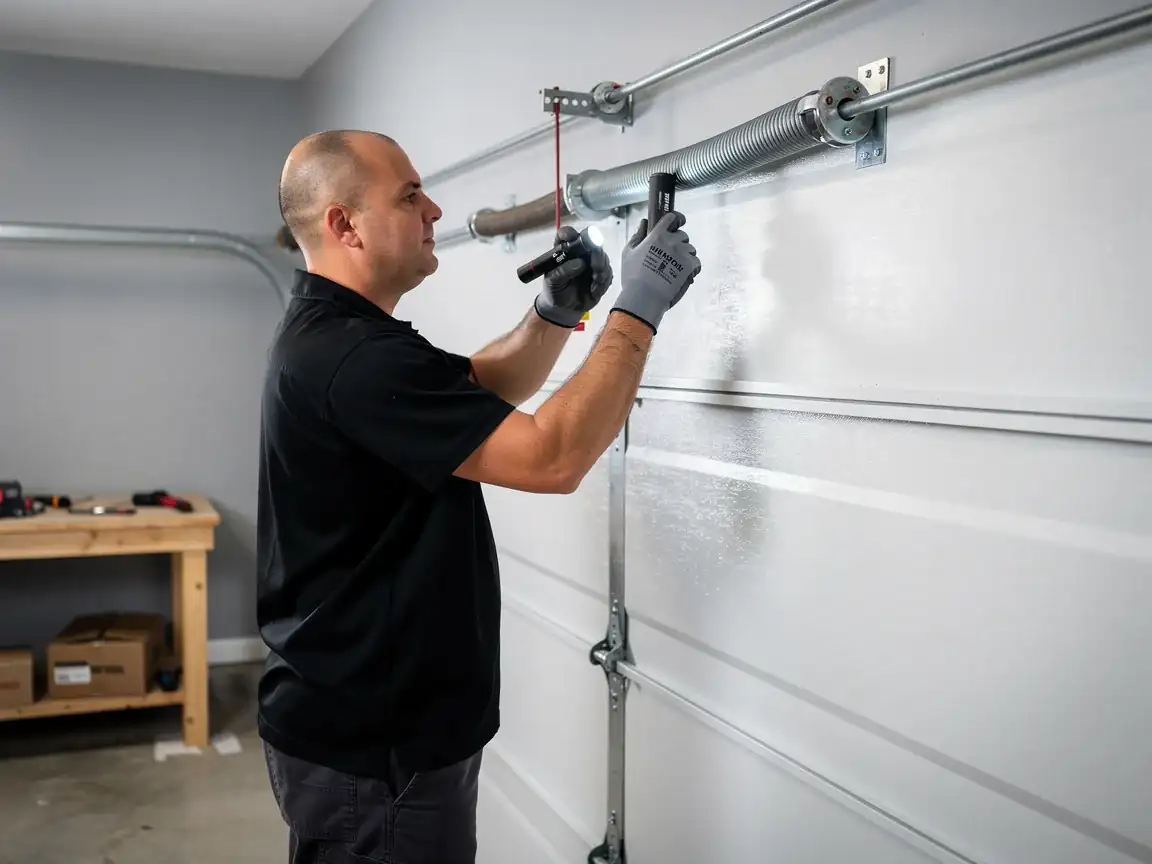
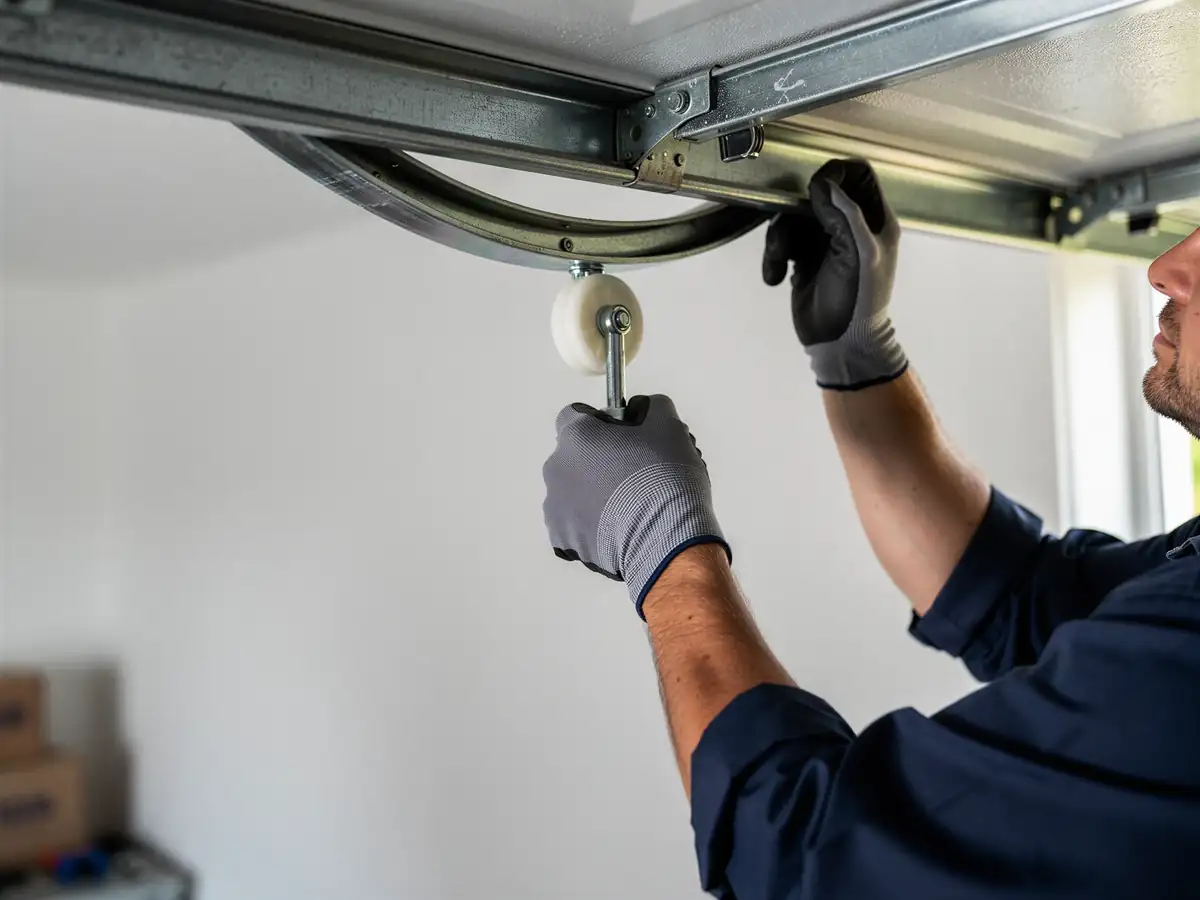
Re-seating rollers in bent track, straightening or replacing a section of track, re-tensioning cables, and rebalancing the door against its springs. Doors from the 1957-2001 window that makes up most of this area's housing stock use a fairly standard torsion or extension spring setup, which helps - the hardware is recognizable even when it's worn.
What can stretch the timeline is parts
If a section of track or a hinge style has been discontinued, finding stock isn't instant, and that's the honest trade-off of fixing an older door instead of replacing it outright. We'd rather tell a Summerville homeowner that a part needs to be ordered than promise a same-day fix we can't back up.
The Complications
A door built around 1974 in a cold-moderate climate band has had five decades of freeze-thaw cycling on its track brackets and fasteners. That cycle loosens lag screws in the jamb, lets track drift out of plumb by fractions of an inch at a time, and eventually a roller pops the rail - which is what most Summerville off-track calls turn out to be, rather than a single dramatic event.
The other complication is layering. Summerville's housing stock sits inside the broader 1960s-70s band that covers most of this service area's nine named communities, and in a lot of these houses the garage door itself isn't original - someone replaced the door at some point but kept the original jamb, track brackets, or opener mount. When the new and old parts don't quite agree on spacing, the door runs slightly off-square even when nothing looks obviously wrong, and it takes less than usual to knock a roller off the rail.
Rust on galvanized track is the other piece worth naming directly: in a door this age, surface rust on the rail itself is common and usually cosmetic, but rust inside the roller bearing or on the cable is a different problem and a sign the whole run should be replaced, not just re-seated.
The Symptom
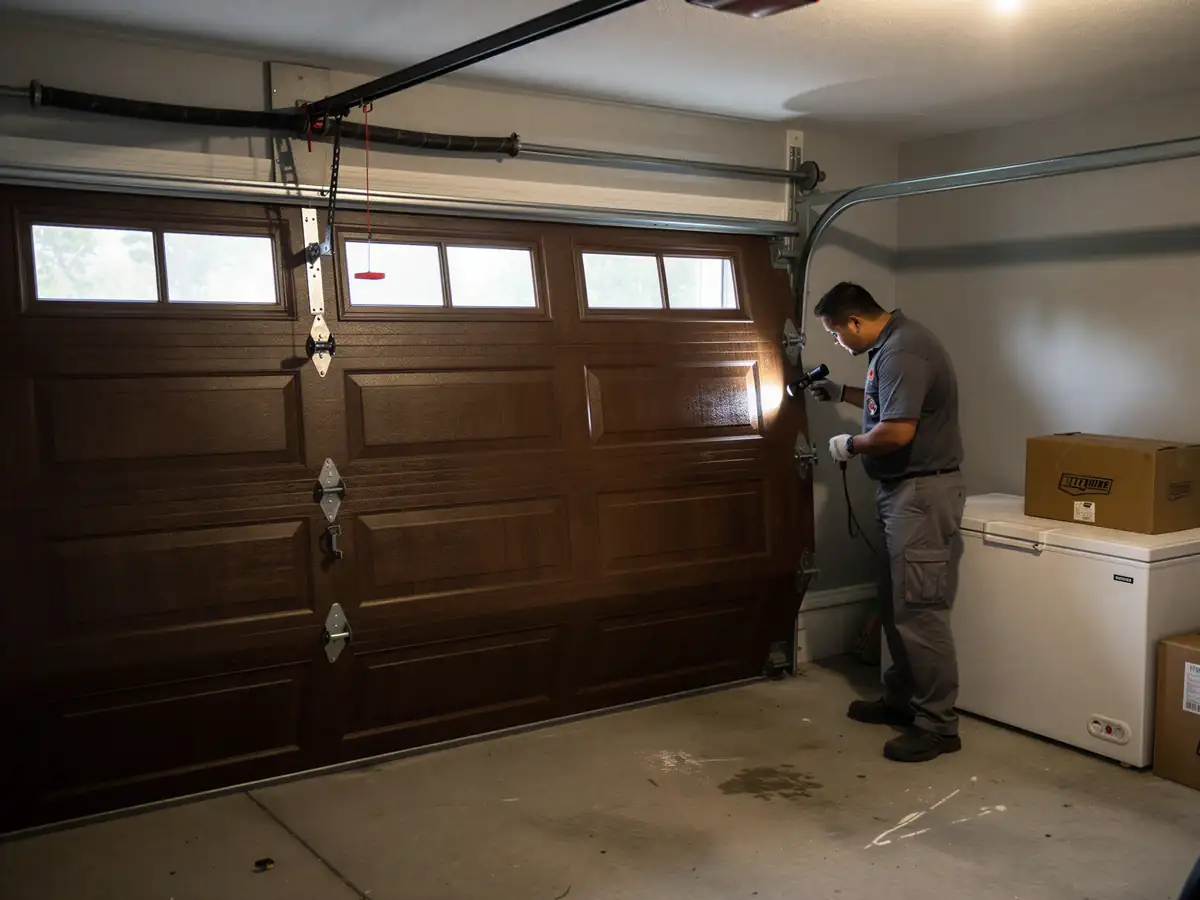
The most common version of this call in Summerville: the door looks like it's hanging at a slight angle, one bottom corner sits lower than the other, and it either won't move on the opener or grinds partway before stalling. That's a roller out of the track on one side, usually the result of a bent rail section rather than a broken cable - though a snapped cable produces a similar lean and needs to be ruled out first, since it changes what's safe to touch.
On these 1970s-era steel sectional doors, the panels themselves are heavier than the lighter aluminum doors from later decades, so an off-track panel carries more weight against the track bracket it's resting on. That's part of why a bent bracket on a door this age tends to get worse faster than the same bend would on a lighter, newer door - the extra weight keeps working the bend wider every time the door cycles.
A door that's jumped the track but is still roughly square in its opening is usually a same-day fix. A door that's twisted visibly in the opening, with a panel buckled at a seam, is further along and worth a real look before anyone tries to force it back.
Doing It Yourself
Don't put your hands on a door that's off its track while it's under spring tension
That's the one firm line here. Torsion and extension springs on a door this size store enough force to cause a real injury if the door drops or a cable lets go while someone's trying to muscle a panel back into the rail.
What a homeowner can reasonably check first
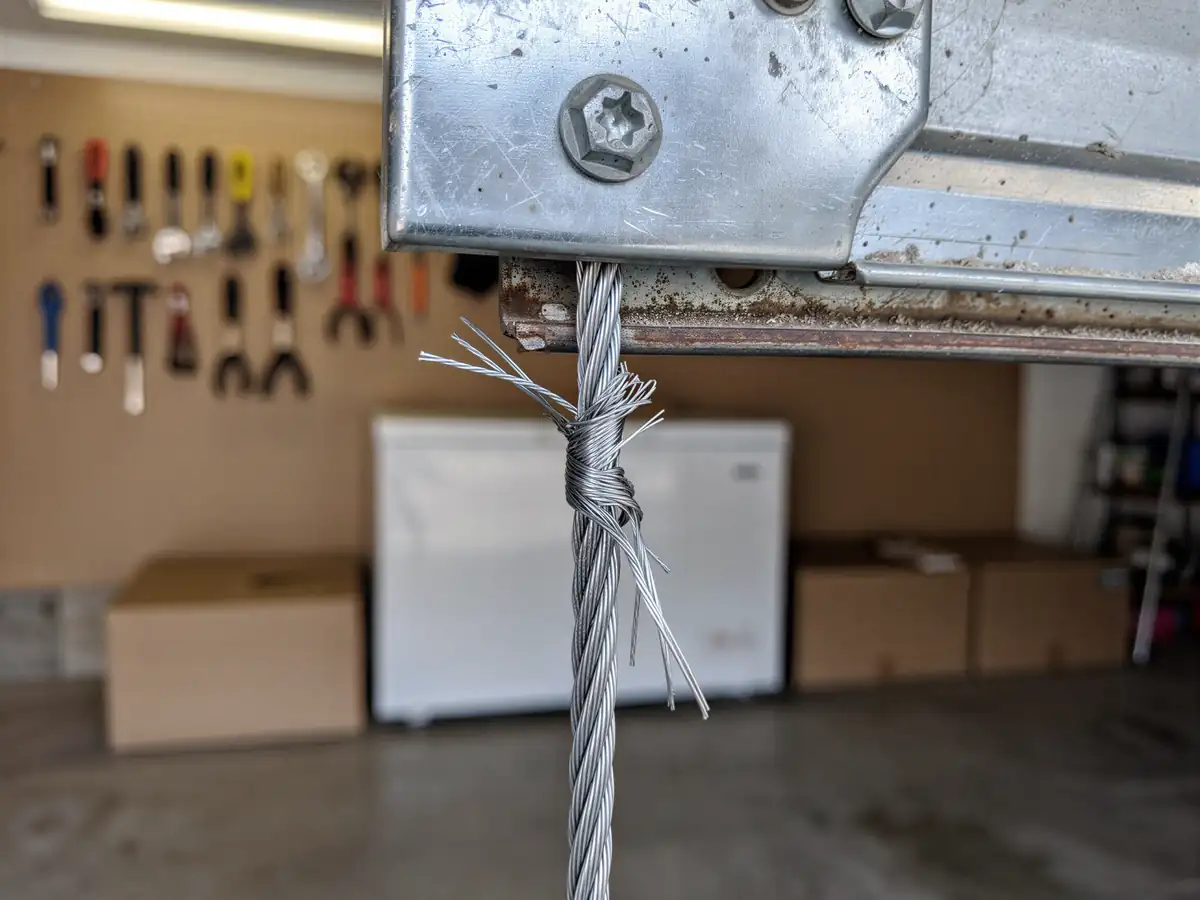
Whether the door is off-track because of a visibly bent rail section (something you can often spot by sighting down the track from outside) versus a cable that's come off the drum, which usually shows as slack cable hanging loose rather than a bent rail. That distinction matters because a bent rail is a mechanical fix with the door still load-bearing, while a loose or broken cable means the door isn't safely supported at all.
If the garage is older stock typical of Summerville's 1970s build era
There's a decent chance the track or hinge hardware isn't a size sold at a standard hardware store, which is the practical reason to call it in rather than drive to pick up a part that may not fit. We'd rather look at it first and tell you honestly whether it's a twenty-minute fix or a track replacement than have someone improvise with the wrong gauge hardware.