Why It Happens Here
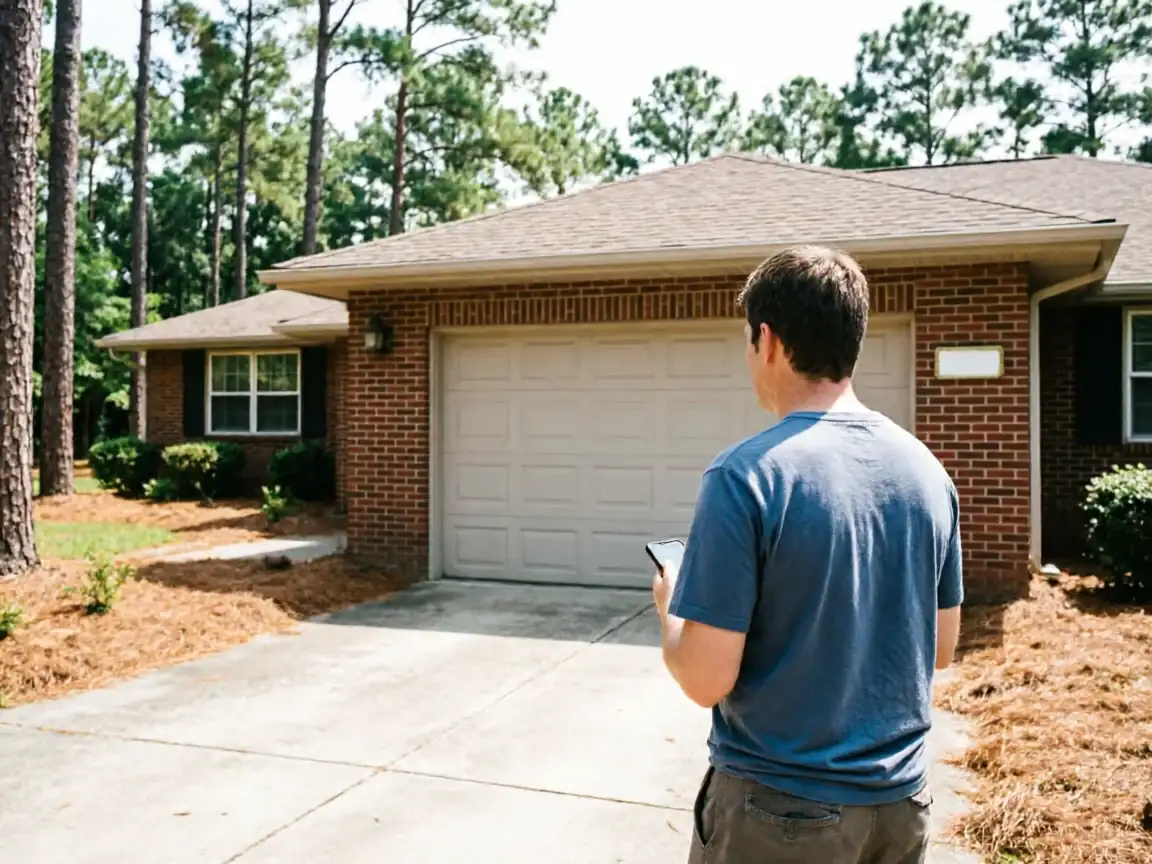
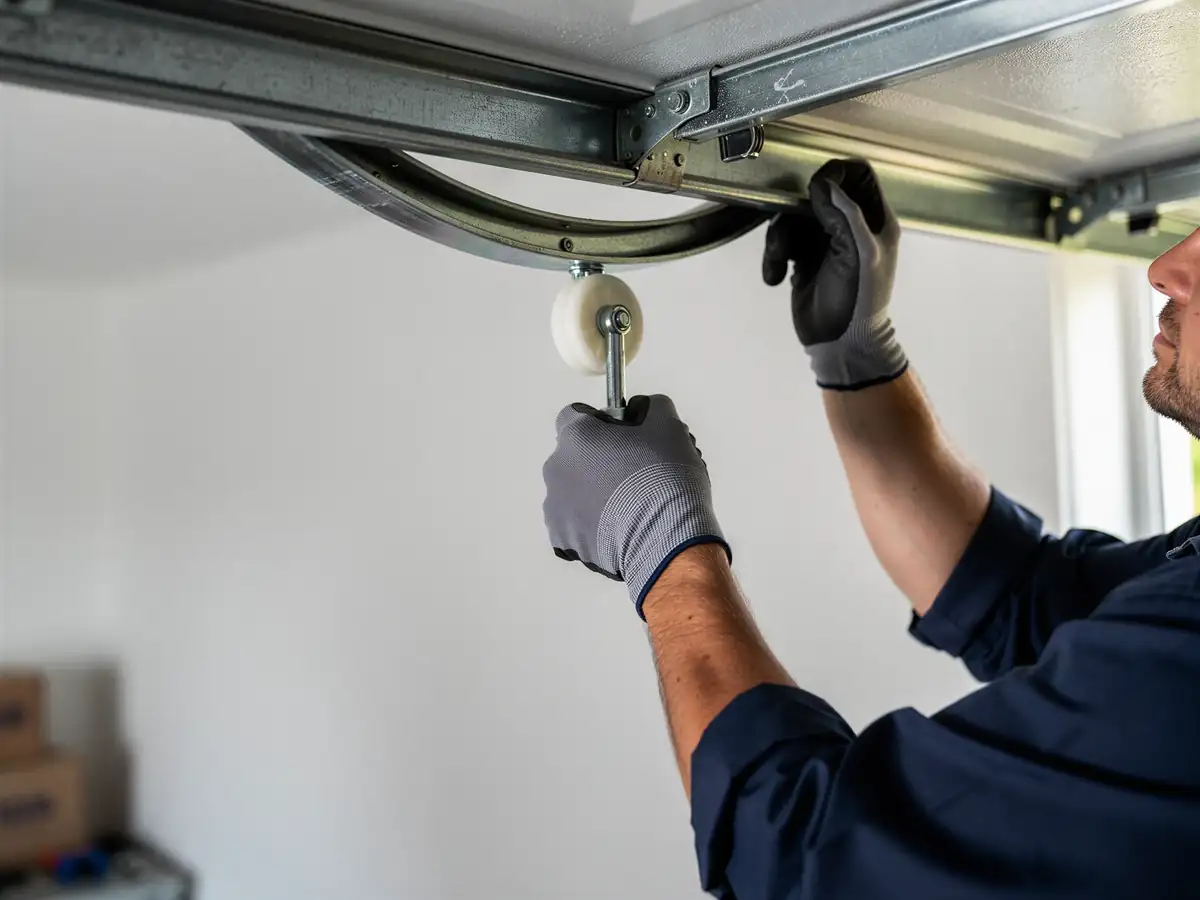
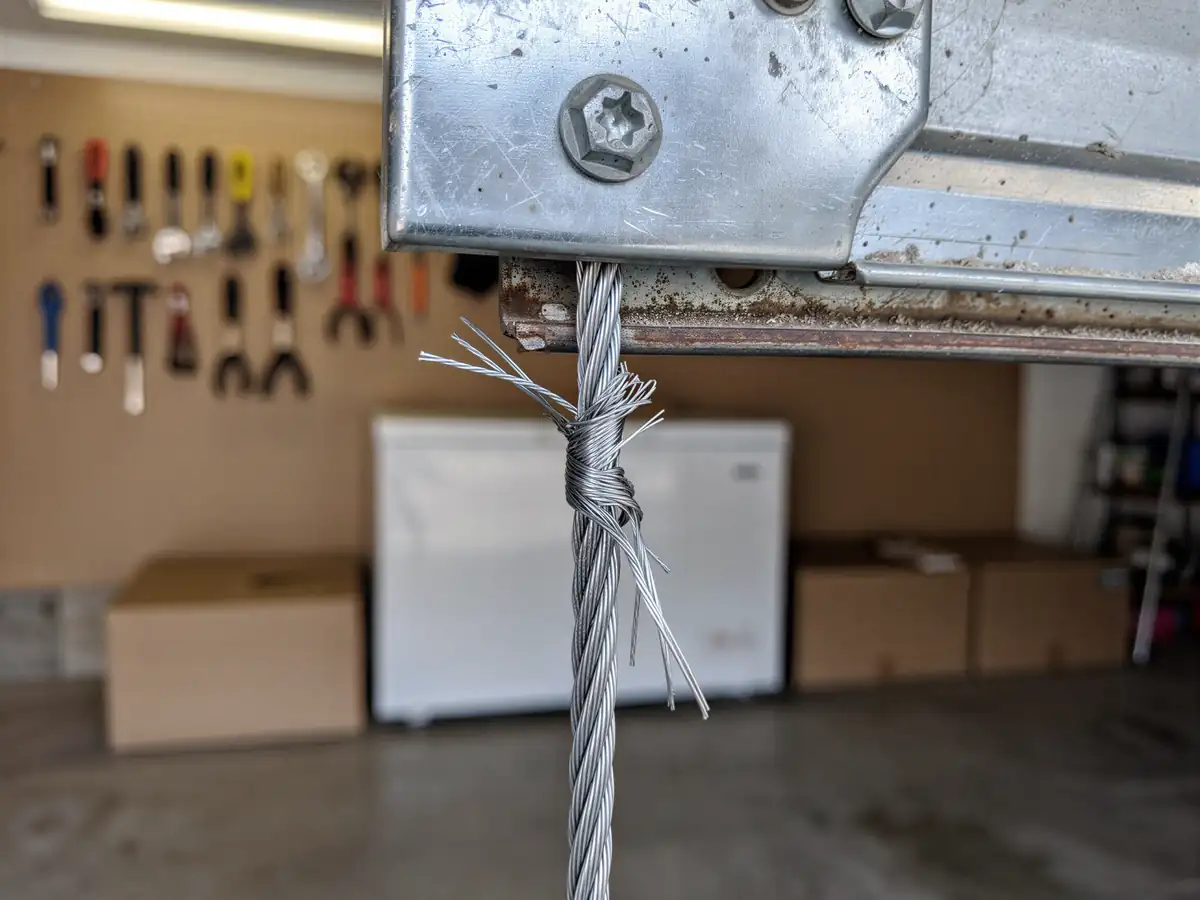
Most of the housing on this side of Cedartown went up around 1976, right in the middle of the 1957 to 2001 run of construction that defines this whole service area, and squarely in the stretch where builders across these nine communities were still hanging doors the same way: extension springs stretched along the horizontal tracks, with a cable looping down to a bottom bracket on each side instead of a torsion spring overhead. That hardware works fine for decades, but the cable is the weak link. It rides over a small pulley at the bottom bracket, and every open-close cycle puts a little wear on the strands at that one contact point. In a cold-moderate climate like this one, the metal contracts in winter and the cable loses a bit of flex, so the fraying that's been building for years tends to let go on the first hard cold snap rather than gradually. A door built in '76 that's never had the cable replaced is working on forty-plus years of that wear, and most of them haven't been touched. That's the pattern we see out here more than anywhere else in the service area: not a snapped spring, but a cable shredded at the drum or the bottom bracket, usually on one side only.
Doing It Yourself
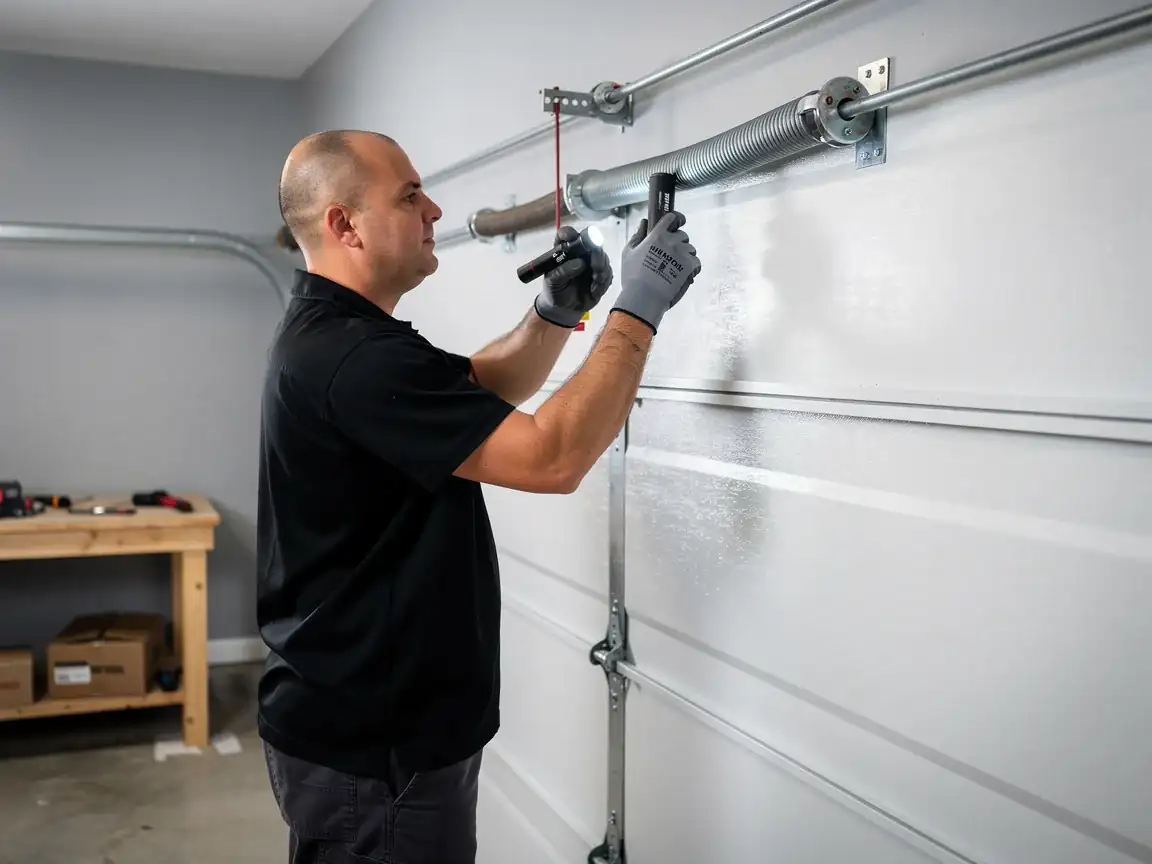
A garage door cable is under real tension even when the door looks still, and the spring it's attached to can hold more stored force than most people expect from something bolted to a bracket. We're not going to walk you through replacing one yourself. Loosening the wrong fastener on an extension-spring setup - the kind common on doors from this era - can send a cable or a pulley snapping back hard enough to break a finger or worse. What you can safely check: whether the cable has visibly frayed strands near the bottom bracket, whether the door is hanging crooked on one side, and whether the cable has come off the drum entirely versus just stretched. Photograph it, note which corner sags, and call that in. That's useful information for us and it costs you nothing to gather. One honest limit: if the drum itself is grooved or the bottom bracket is bent, a cable swap alone won't fix the sag, and we'll tell you that on site rather than replacing a cable that's going to fail again in a month.
The Symptom
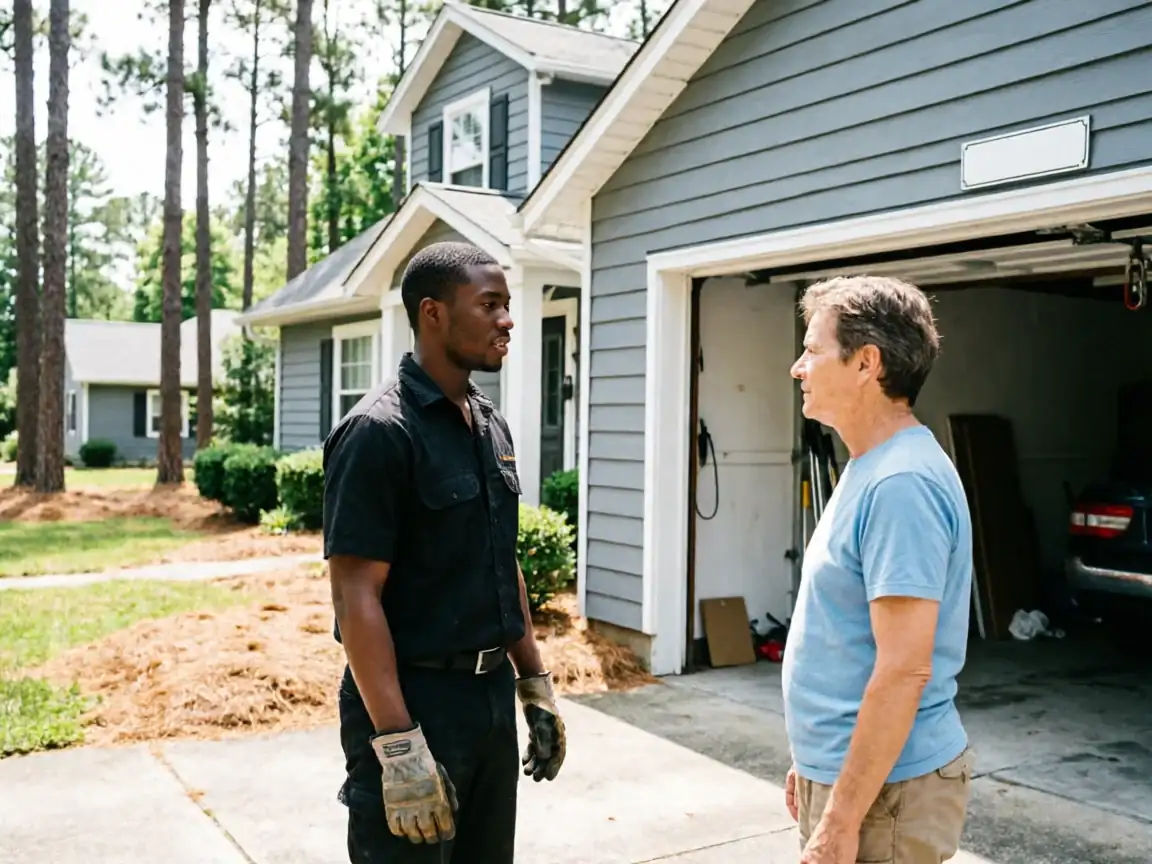
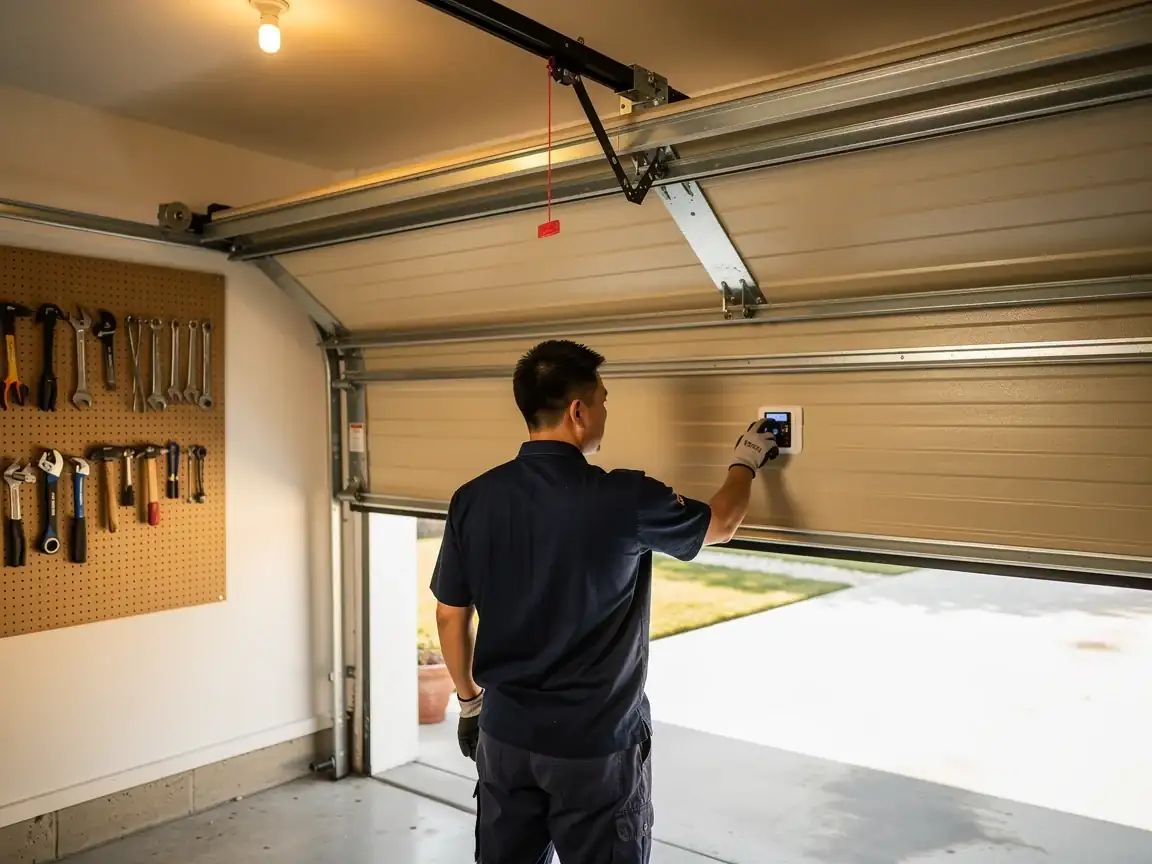
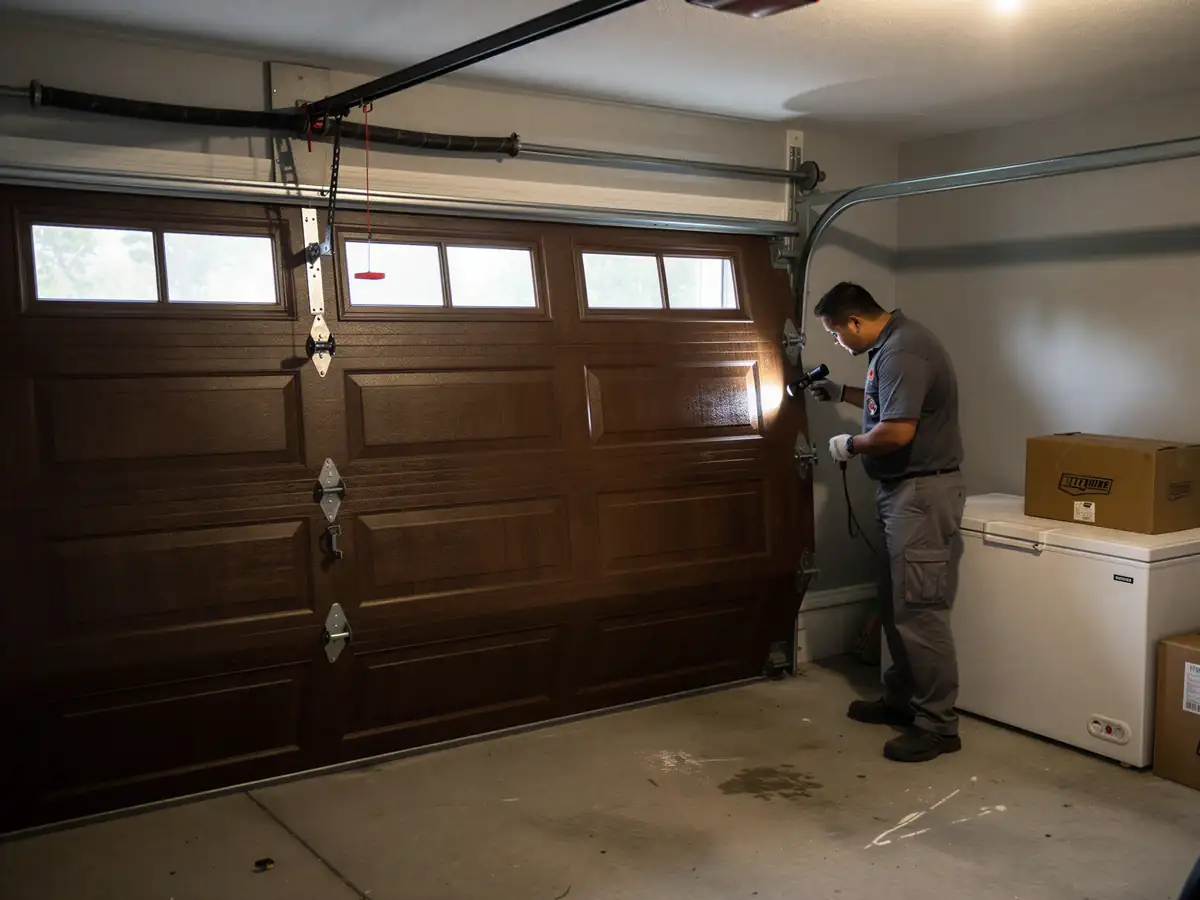
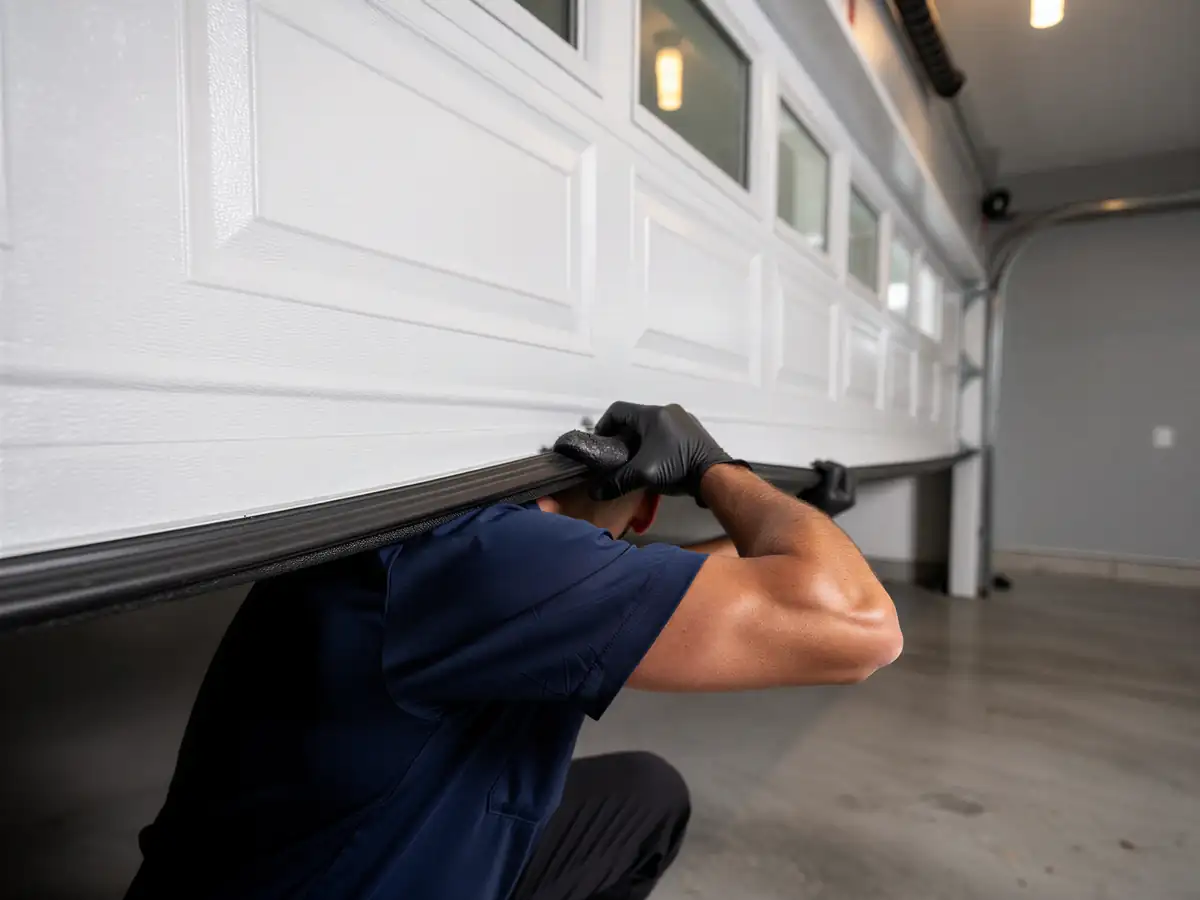
The giveaway is a door that hangs crooked - one corner a couple inches lower than the other, or a door that stutters and jerks partway up instead of rising smooth. On the older extension-spring doors common around Cedartown, that almost always means the cable has slipped off the drum or frayed through near the bottom bracket on one side, so that corner has lost its lift while the other side is still carrying full tension. You might hear a snap first, or you might just notice the door's gone lopsided over a few days as the fraying worsens before it lets go completely. Don't force the opener through it - running the motor against an uneven load stresses the opposite cable and the track, and turns a one-side repair into a two-side one. If the door's come off track entirely or is wedged at an angle, leave it where it is and call it in rather than trying to muscle it back into the tracks.