Why It Happens Here
Start with the money, because it decides more than people admit. Cedartown's median household income is $32,064 - roughly $20,000 below the $52,799 median across the wider area we cover out of Rome. That gap matters the moment an opener quits, because it sets where the repair-or-replace line sits for a given house. A $300 logic-board swap makes sense on almost any opener. A $550 gear-and-sprocket rebuild on a unit that's already fifteen years past its expected life does not, not at this income level, when a new chain-drive opener installed costs less than the rebuild plus the next failure.
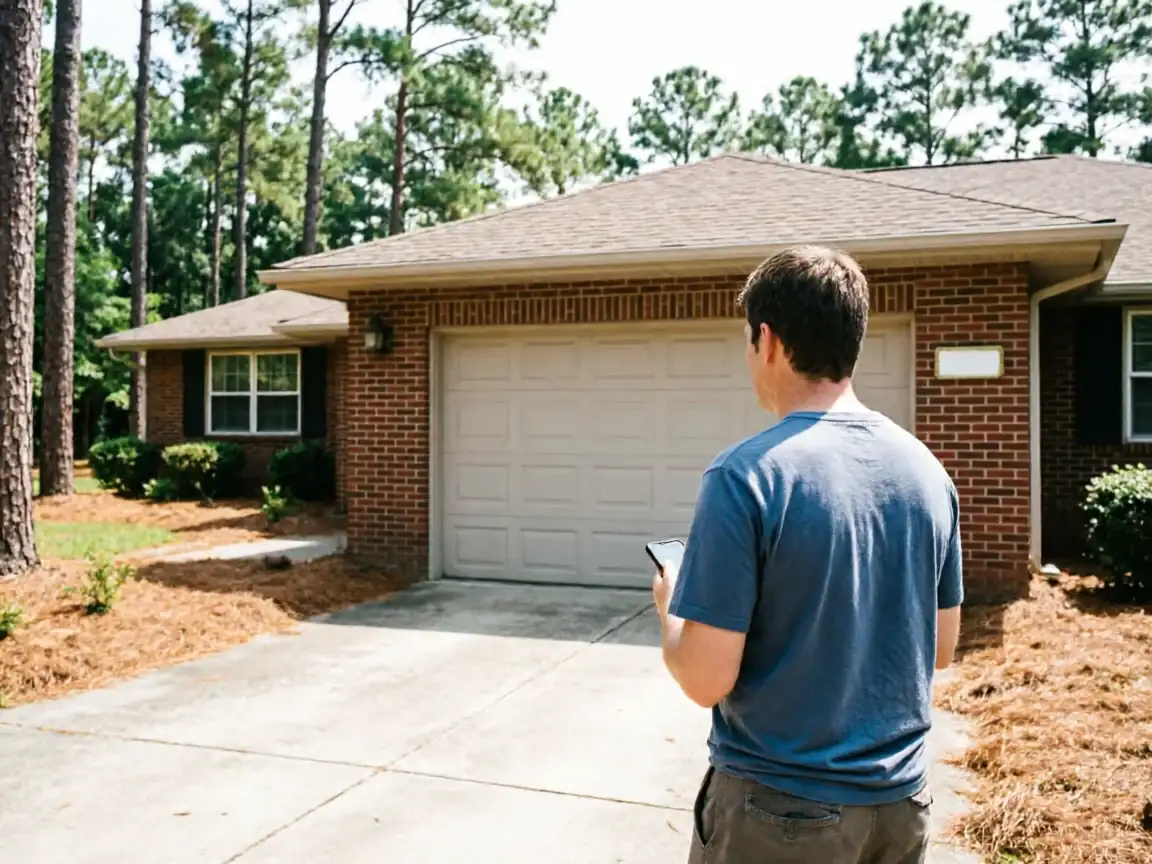
The housing stock is the other half of it. Most homes in Cedartown went up around 1976, right in the middle of the 1957-2001 window that covers this area, with most of that stock dating to the 1960s and 70s. Openers from that era, and the replacements people put in during the 80s and 90s, are chain-drive units with steel gears that strip teeth after enough winters. Cedartown's winters sit in the cold-moderate band for this region, and cold makes grease stiffen and gears bind, which is exactly the stress that finishes off an already-worn drive gear.
Booking a Visit
We run out of Rome, and Cedartown is seventeen miles from the shop
We don't have a branch or a drop-off point here, so every job starts with that drive, and we schedule opener calls out this way in blocks rather than one at a time, same as the rest of our service area. When you call, tell us the opener brand if you can read it off the housing, whether the light blinks or stays dark, and whether the motor hums without moving the door or stays silent entirely. That narrows down whether we're bringing a logic board, a drive gear kit, or a whole new unit, and it means less time standing in your driveway guessing.
We book by the week rather than promising a same-day slot for every town we cover, Cedartown included
Because the honest version of a 17-mile drive is that it gets scheduled, not rushed. If your opener has failed and the door is stuck down, say so when you call - a door that won't open isn't the same priority as one that opens slow.
Doing It Yourself
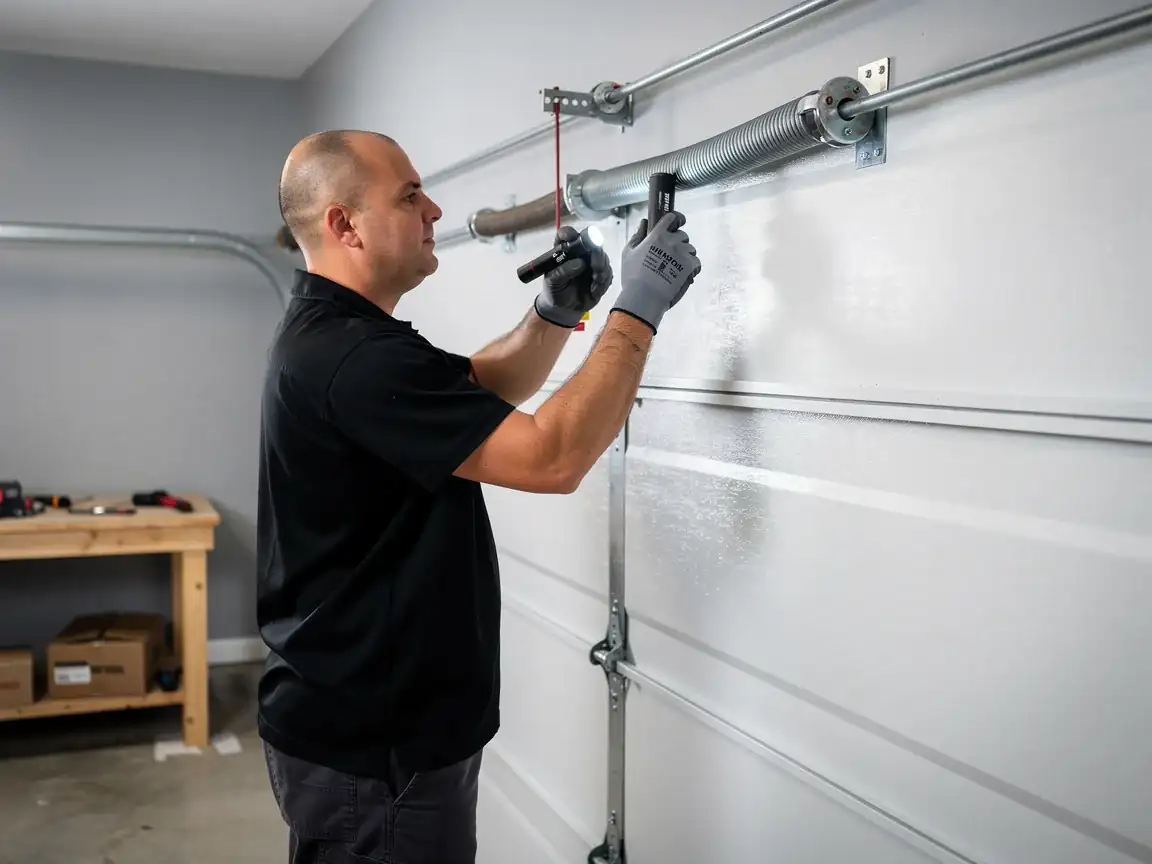
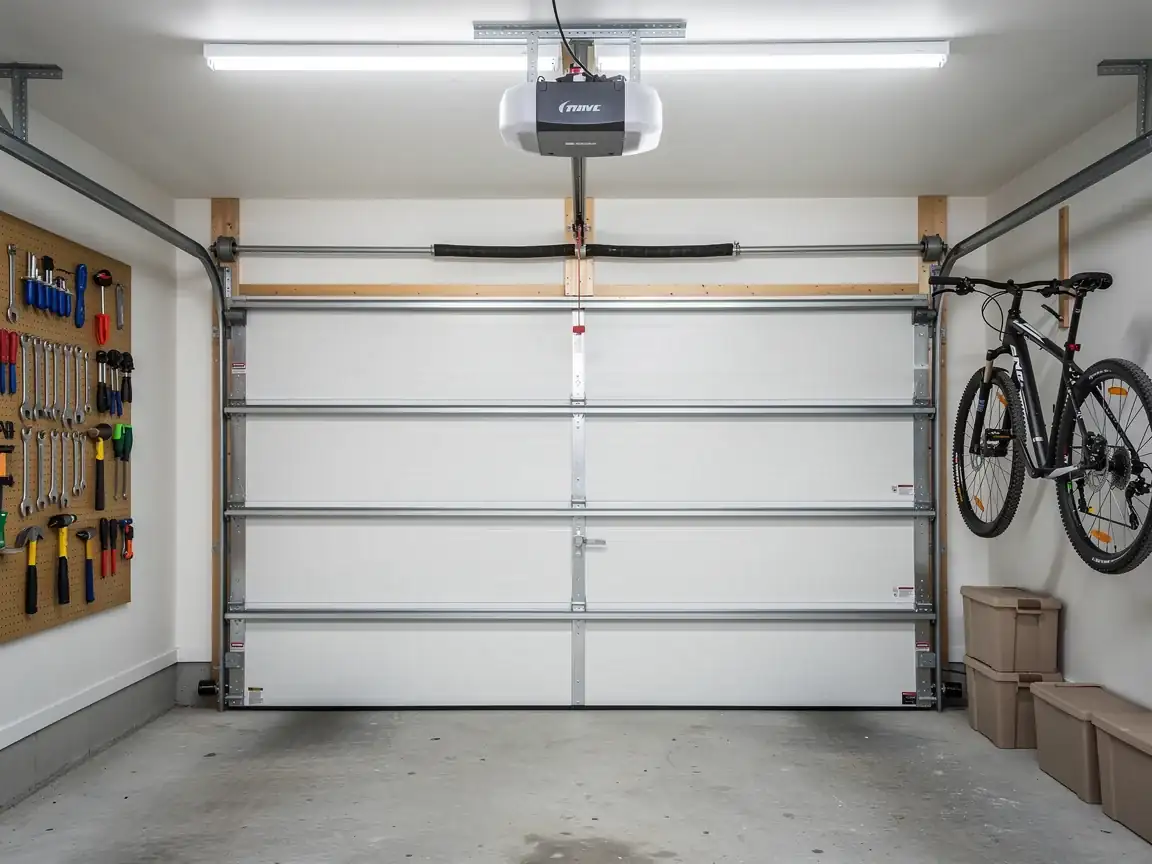
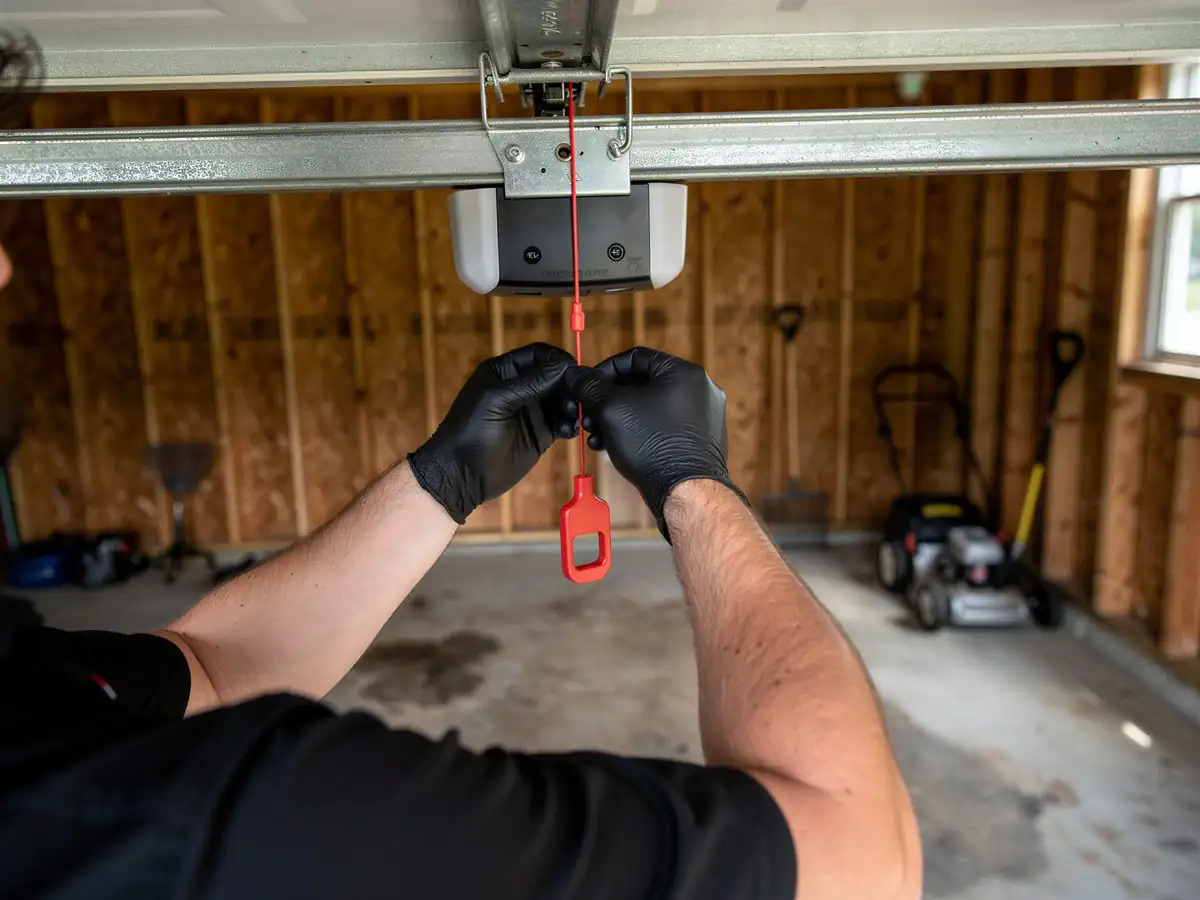
Some of this you can check before you call anyone. Unplug the opener, pull the manual release cord, and see if the door moves by hand without much fight. If it's heavy or won't budge, the problem is the springs or cables, not the opener, and that's a different repair entirely - don't put a new motor on a door that's fighting bad springs. If the door moves fine by hand but the opener won't run it, check the wall switch wiring and the safety sensors near the floor; a sensor knocked out of alignment, which happens more than you'd think with mowers and bikes going past it, throws the same blinking-light fault as a dead board.
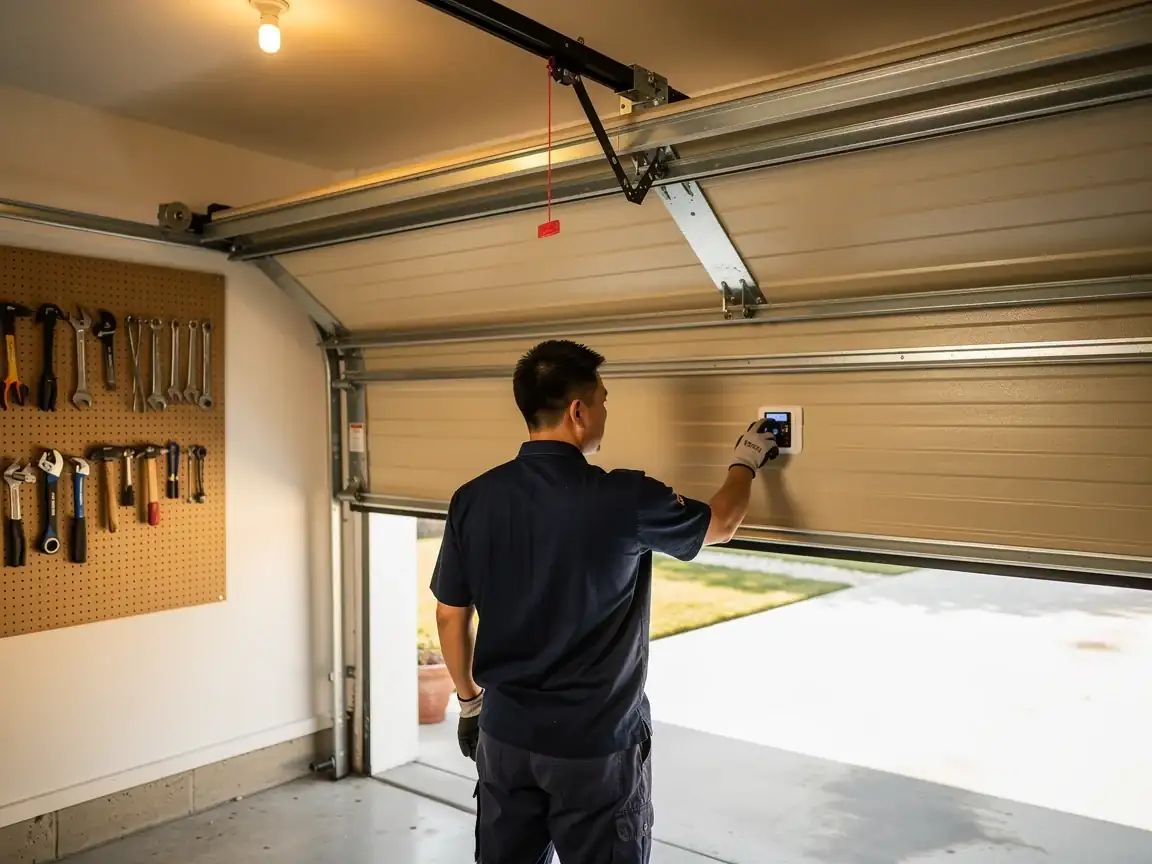
What we don't recommend you tackle: opening the opener housing to replace the drive gear or logic board yourself. The parts look simple but the gear kits are brand-specific, and a wrong one strips out again within months. That's a job worth the drive from Rome rather than a return trip for a part that didn't fit.
The Symptom
On houses from Cedartown's building era, the failure pattern repeats enough that we can describe it before we see the unit. The opener runs, the light comes on, but the door creeps instead of running at normal speed - that's a worn drive gear losing teeth, not a motor on its way out. A hard clunk partway through the cycle, followed by the door stopping dead, is usually the same gear finally stripped past use. Total silence with no light and no hum points to the logic board or a tripped breaker, worth checking before anything else.
A chirping or grinding noise that gets worse in cold weather is stiffened grease on an aging gear train, the kind of wear that shows up on openers that have run fifteen-plus years without being opened up. None of these symptoms tell you the brand or exact part without a look at the unit, but they do tell you whether you're looking at a $300 fix or a $550 one that's better spent on a new opener.