Why It Happens Here
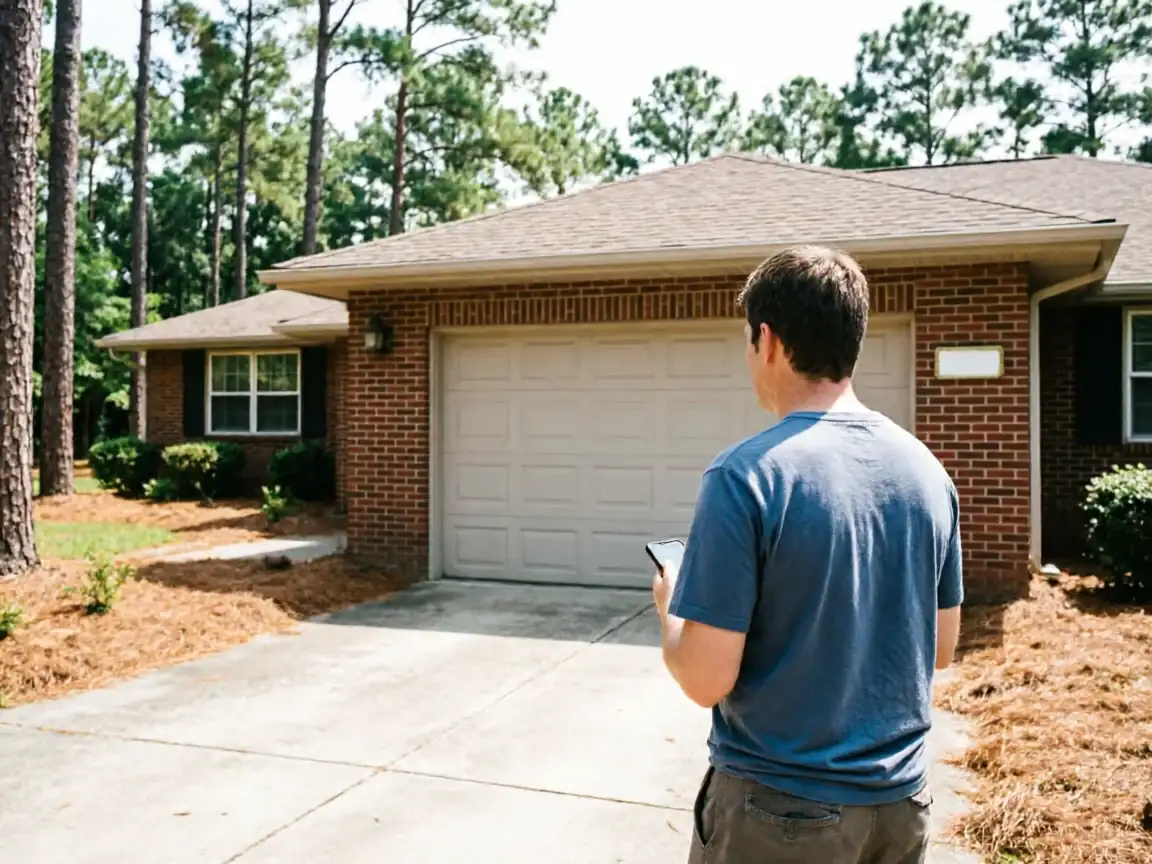
Cedartown is a small town - about 3,764 households - so the calls we get for a door hanging crooked in its tracks don't come in at the volume you'd see somewhere bigger. That doesn't make the problem less common per house. Most of the housing stock across the wider service area went up between 1957 and 2001, with a median build year around 1975, and Cedartown's own homes track close to that at 1976. Doors from that era were set up with steel tracks bolted straight to wood framing that's shifted a little every year since. A track bracket that's worked loose over four decades doesn't announce itself until the door jumps the rail on a cold morning. The service area sits in a cold-moderate climate band, and that matters more than people think: metal track contracts in a hard freeze, and a door that rode fine in August can bind or jump in January because the clearance between roller and rail tightened up overnight. On an older house, that's often the final straw on a bracket that was already a little loose. We see this pattern most on the original hardware - nobody's swapped the track since the house was built, and nobody budgeted for it.
Doing It Yourself
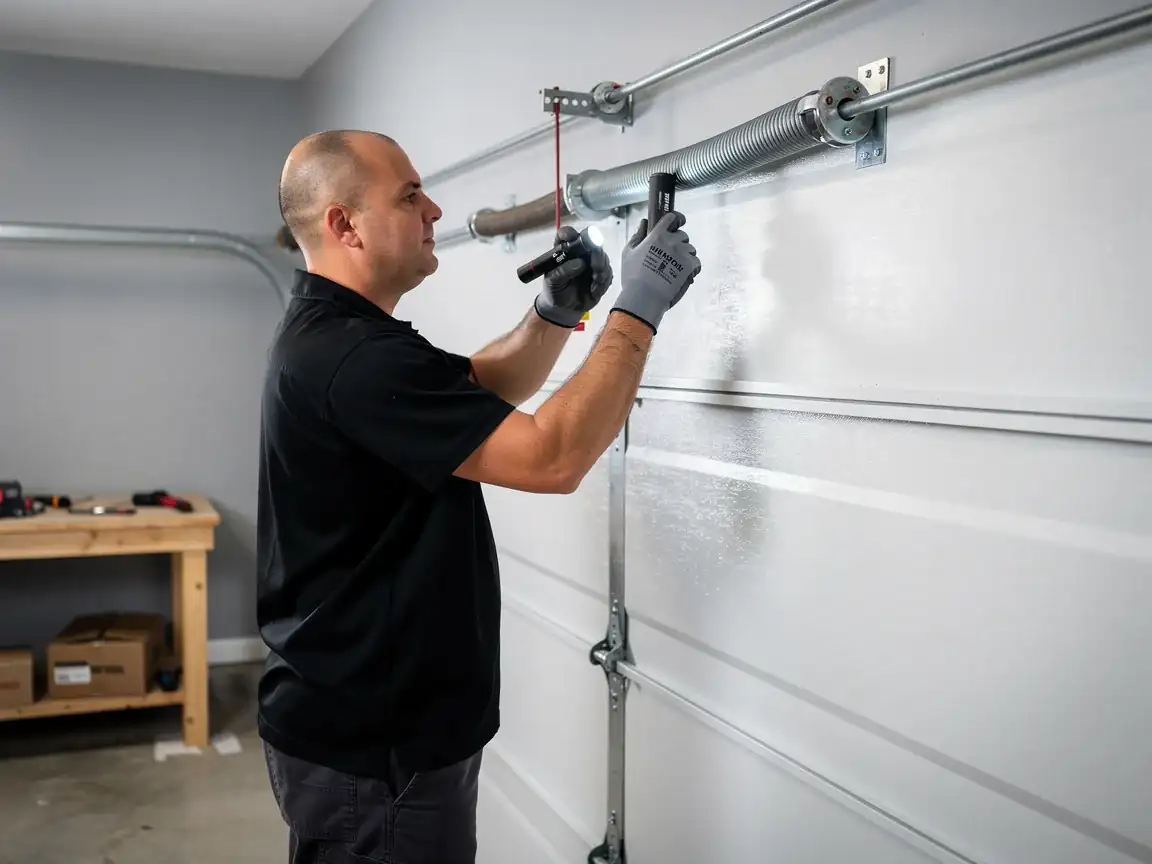
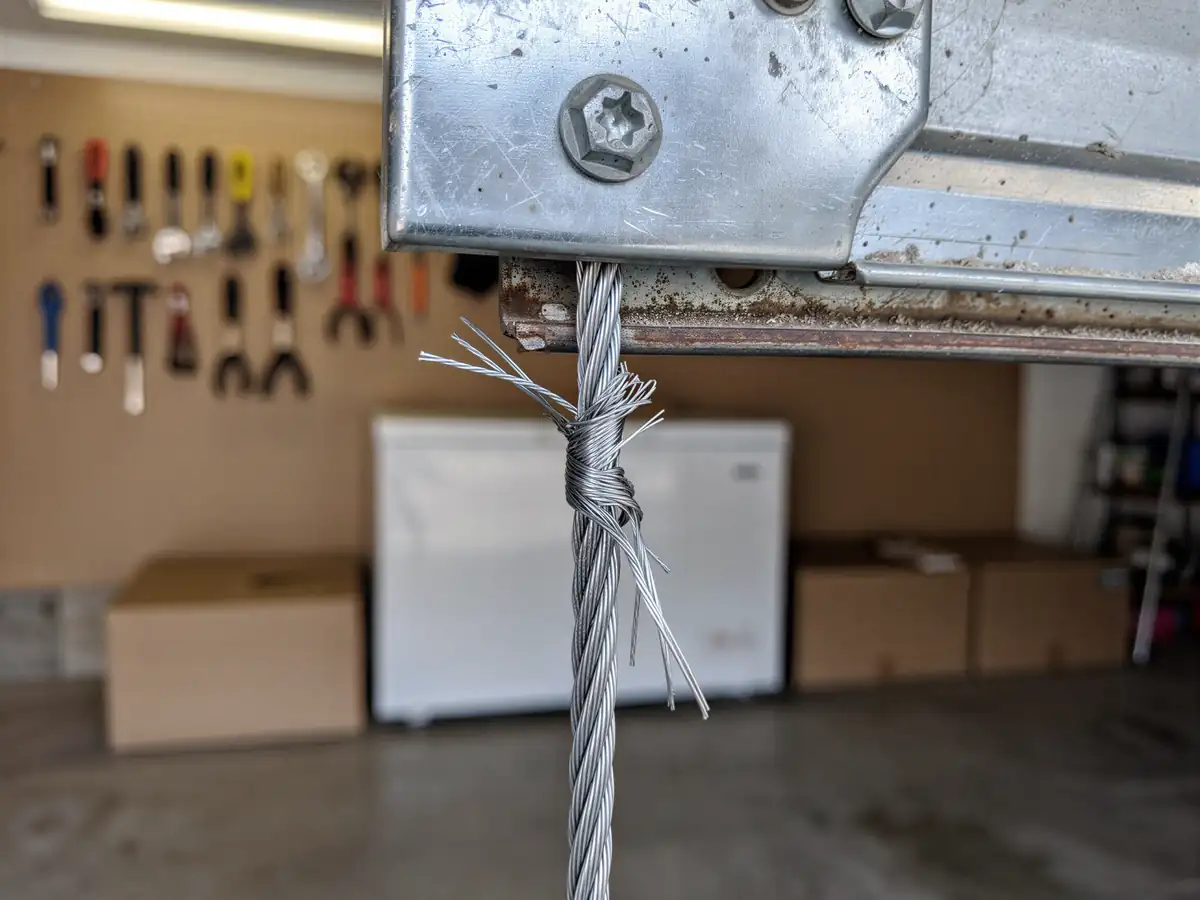
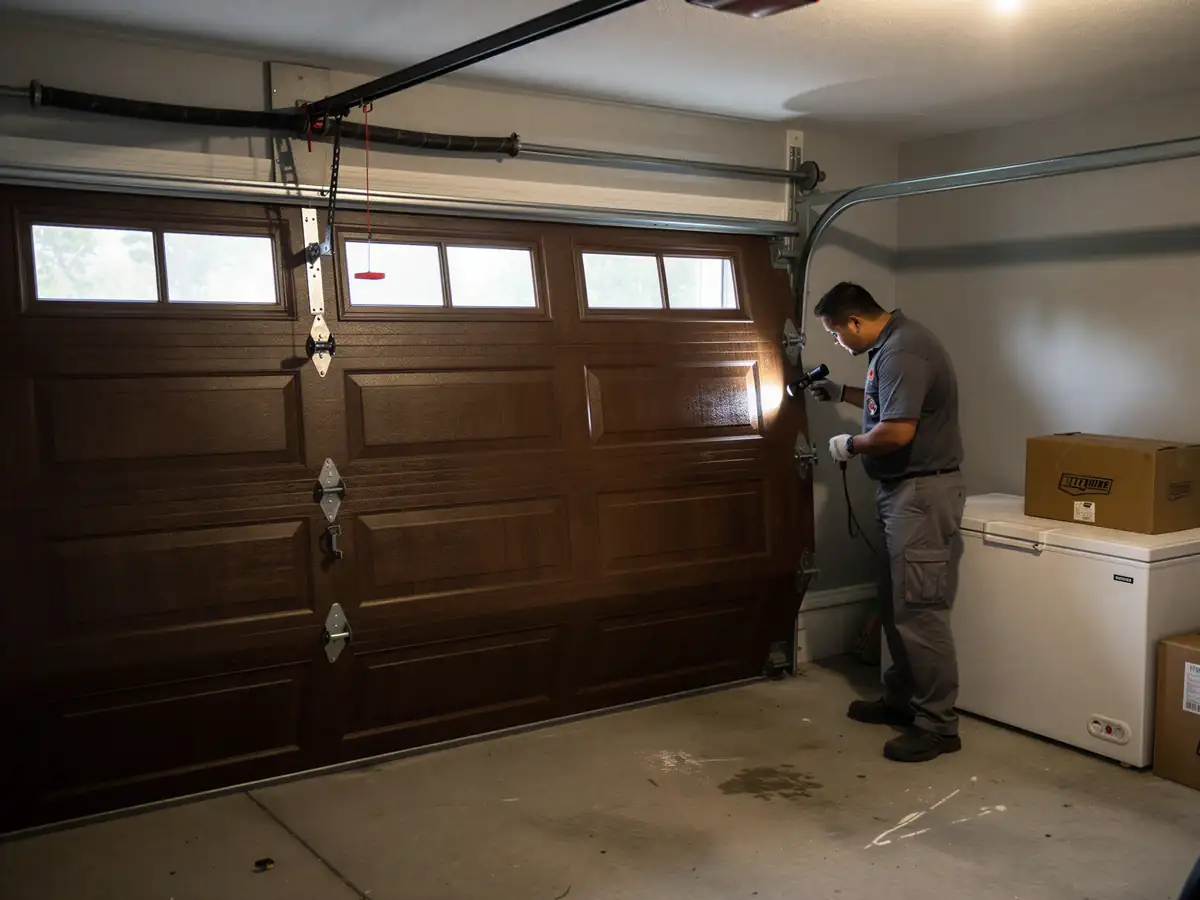
If the door is off the track but the opener is disconnected and the door isn't under spring tension on one side, you can sometimes walk it back onto the rail by hand - slowly, with the door most of the way down. That's about where the DIY line ends. If a cable has come off the drum, if one side of the door is riding higher than the other, or if the bottom roller has actually left the track and the door is wedged, stop. A door under torsion spring load that's jumped its track can let go fast, and on the older one-piece and early sectional doors common in houses from this era, the hardware wasn't built with today's safety cables. We won't pretend there's a universal trick here - every job depends on which bracket let go and how long the track's been loose. If you're not sure which situation you're in, don't force it back by hand. A bent track or a cracked panel from a forced fix costs more to put right than the original call would have.
The Symptom
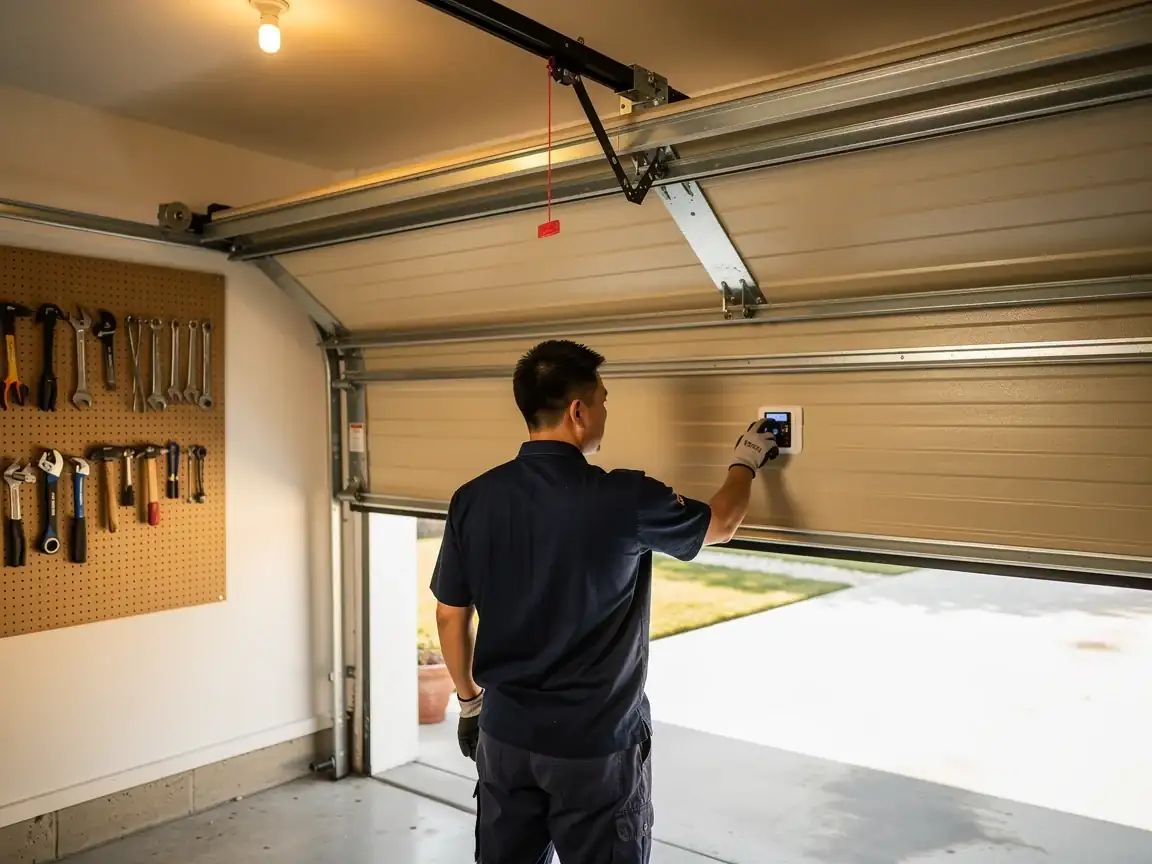
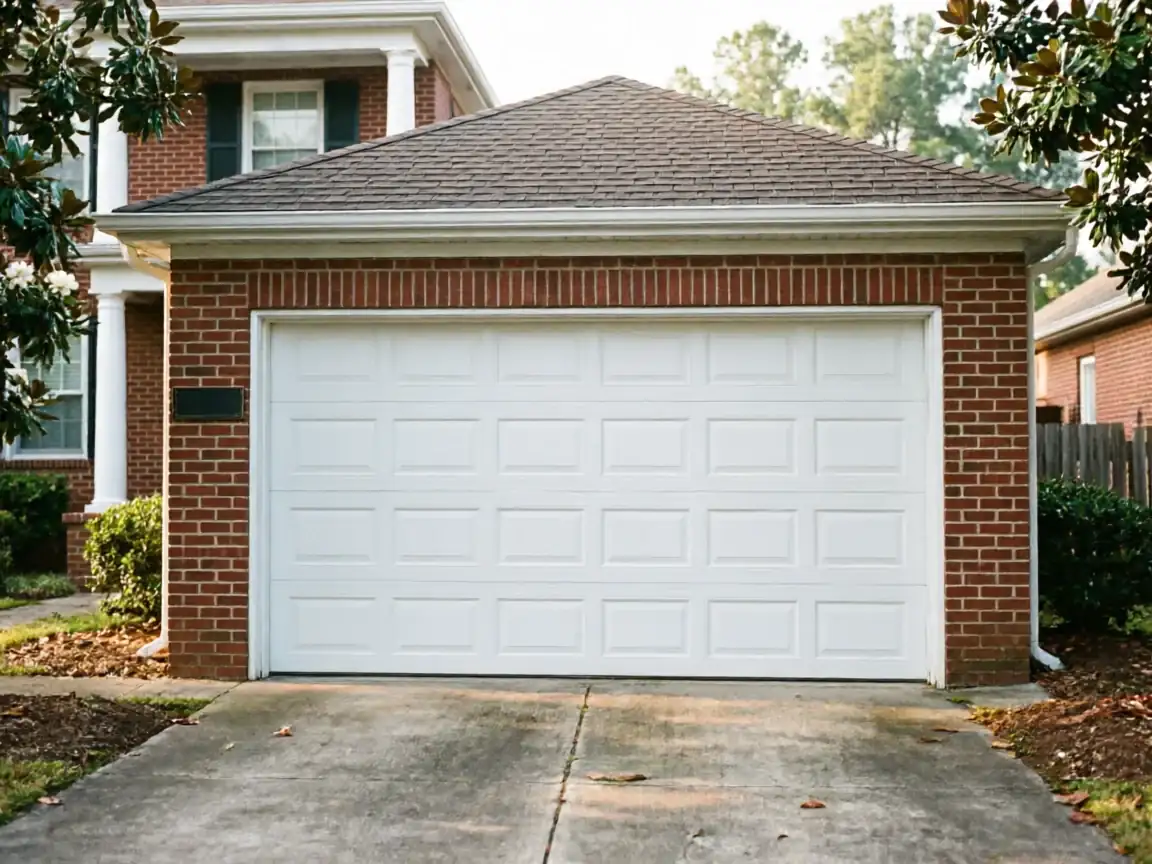
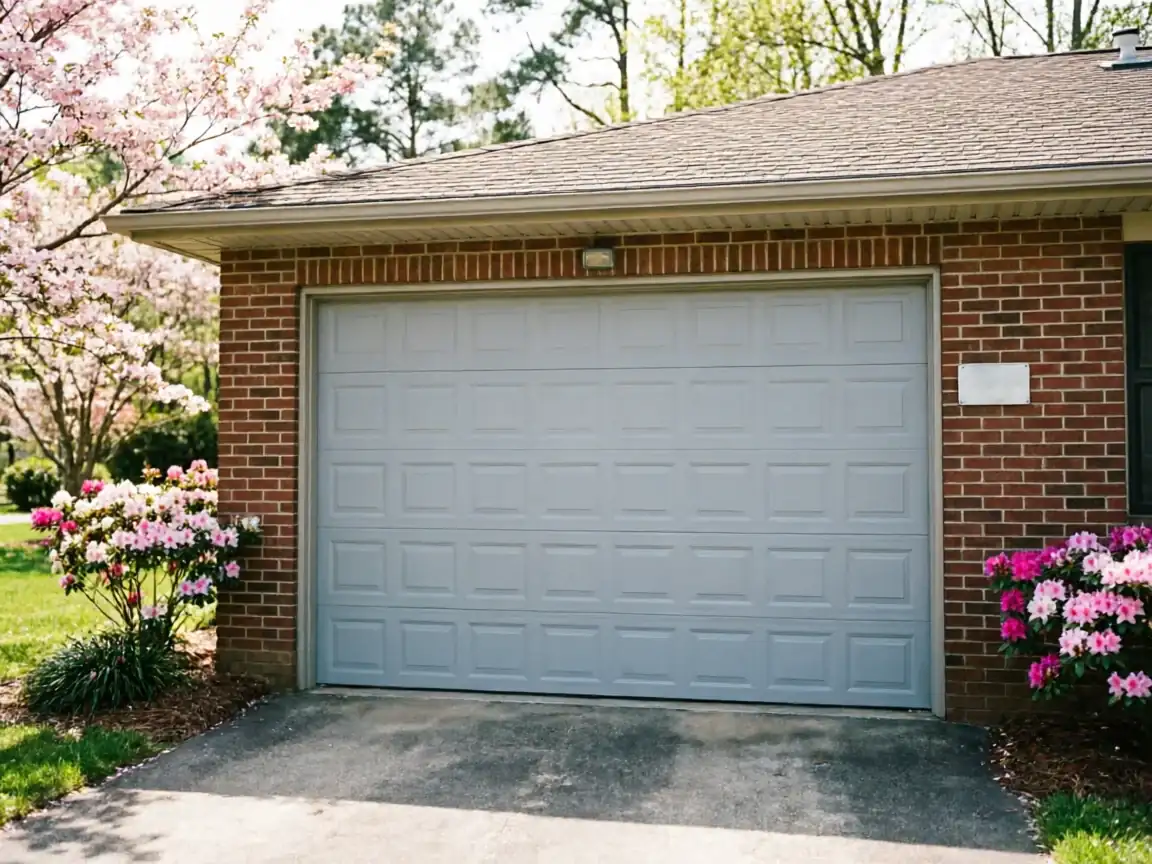
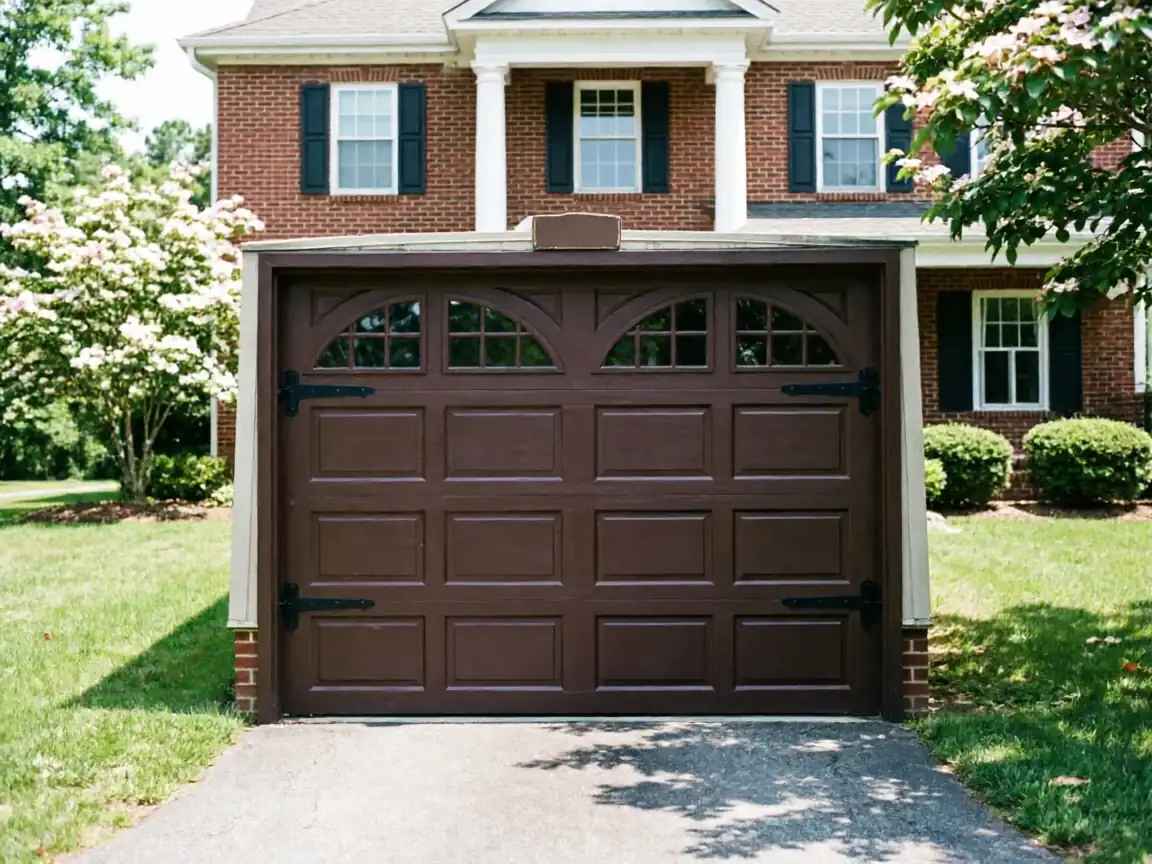
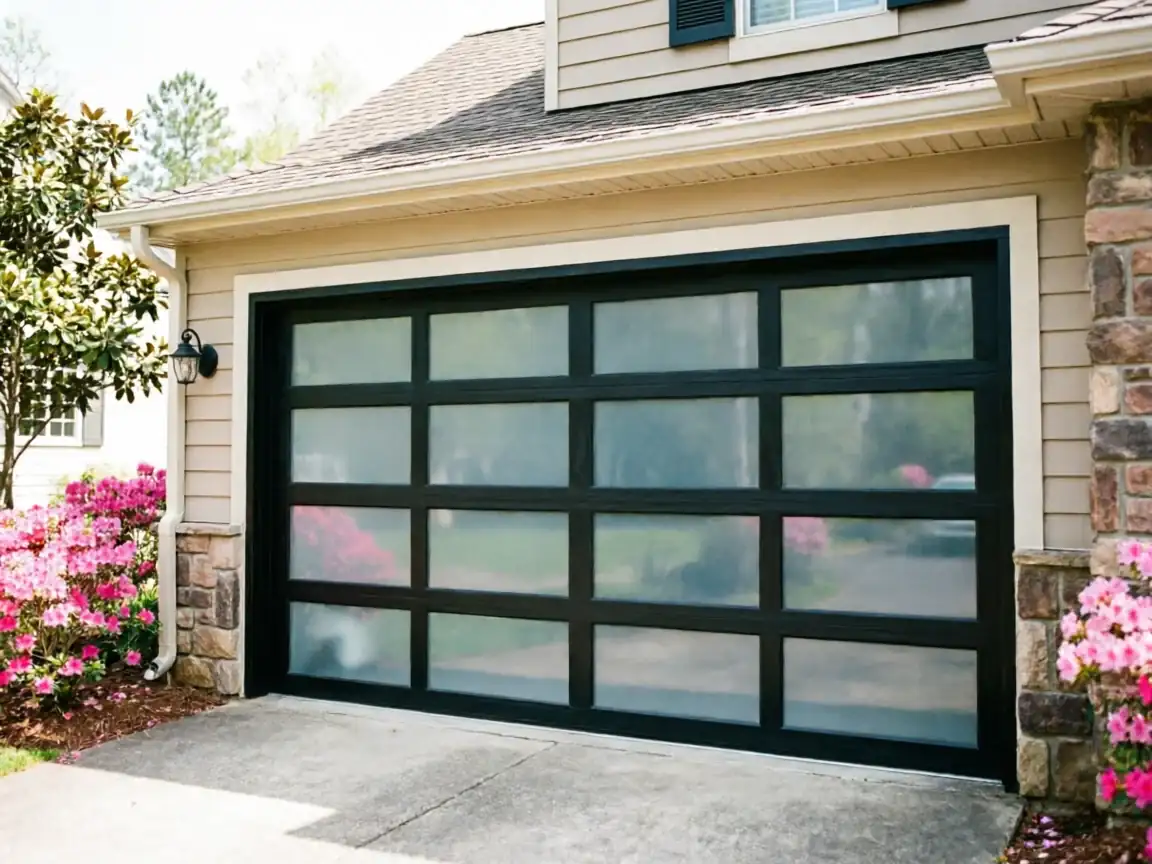
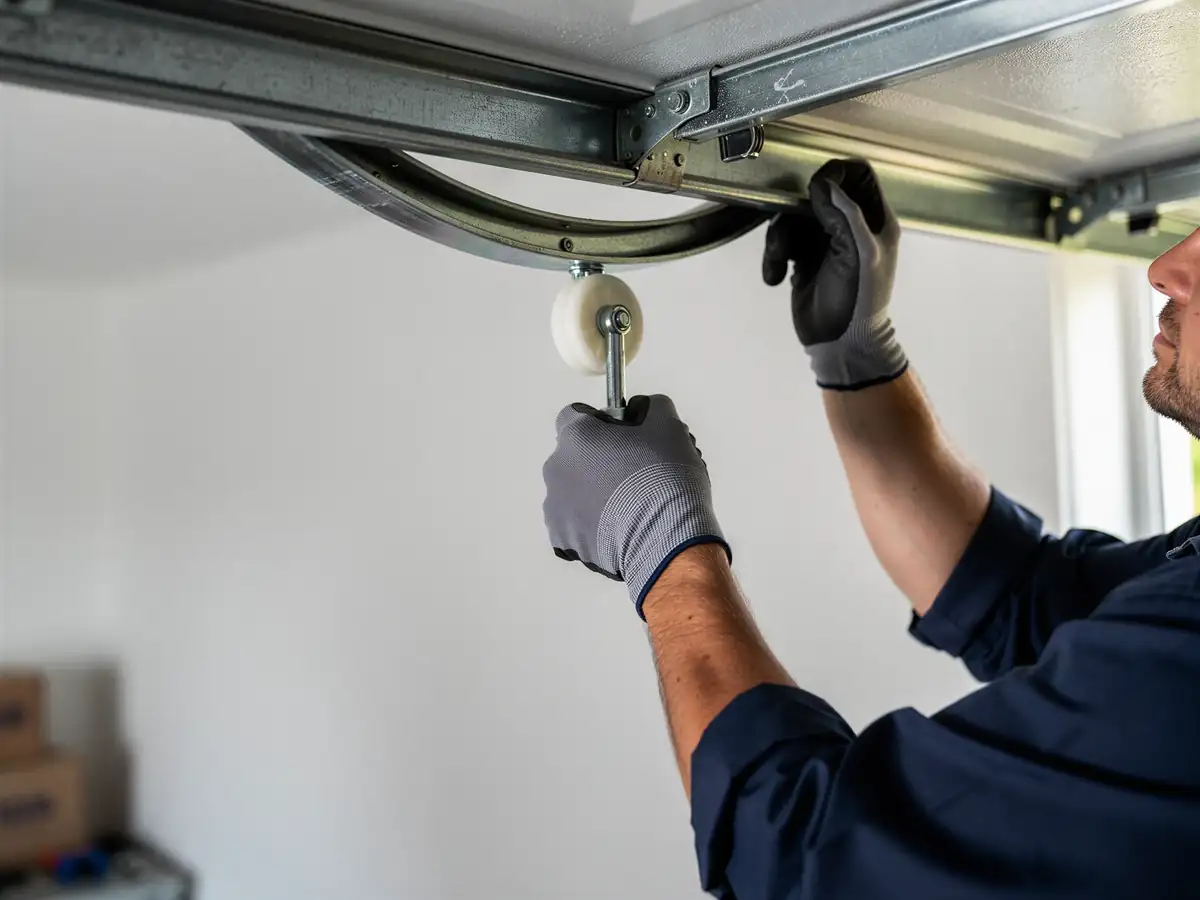
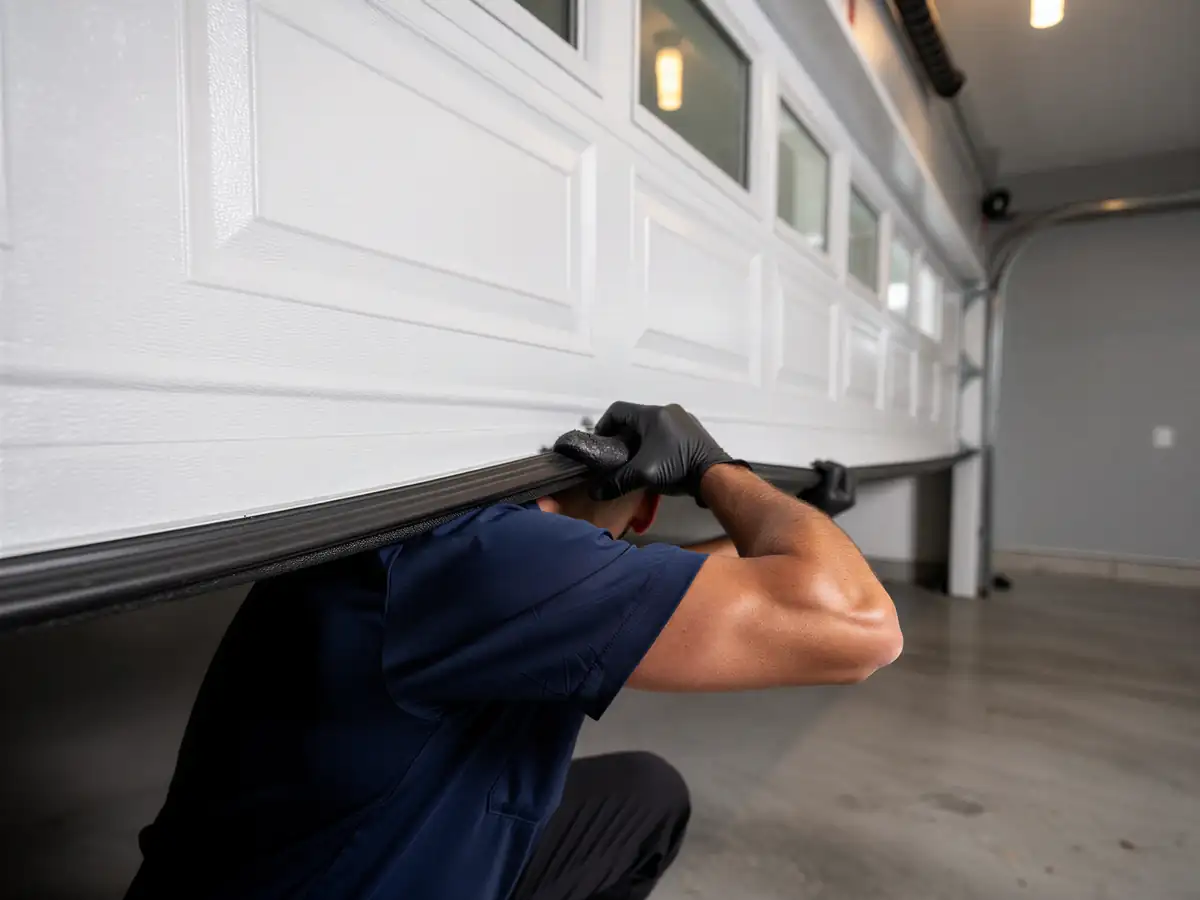
The telltale sign is a door that doesn't close square - one corner drags the floor before the other, or the door stutters and reverses on the opener's safety sensor because the track alignment has thrown off the travel limits. On the older sectional doors you'll find through this stretch of Cedartown, the first panel sometimes pulls slightly inward at the bottom corner, which is usually a roller that's worked its way out of a track bent by years of minor bracket slip. On the rarer one-piece doors, the whole door can tilt a few degrees off plumb when a side bracket lets go, which looks dramatic but is often a short fix if caught before the track itself bends. Either way, the door moving unevenly - not just slowly - is the detail that tells you it's a track problem and not a spring or opener issue.